
Tokenization Platform Security: What Investors Need to Know
Investor security guide: This article covers platform security. For comprehensive blockchain security and technology guidance, see Blockchain Security & Token Technology: 2025 Reference Guide. Also relevant: How to Invest in Tokenized Assets: Complete 2025 Guide.
What is Tokenization Platform Security?#
Tokenization platform security encompasses all measures protecting investor assets, tokens, and data on blockchain-based tokenization platforms. This includes custody of underlying assets, smart contract security, regulatory compliance, and operational safeguards.
For comprehensive context, see our Ultimate Guide to Tokenization and RWA. Learn about legal and compliance requirements in our Tokenization Legal Structure guide.
Key Points:#
- Platform security protects both digital tokens and underlying real-world assets
- Security involves multiple layers: custody, smart contracts, compliance, and operations
- Investors should verify security measures before investing
- Regulatory compliance is a critical security component
Why Security Matters for Investors#
Asset Protection: Your investment represents real value (real estate, securities, commodities). Security failures can result in total loss.
Regulatory Risk: Non-compliant platforms face shutdown, freezing assets and preventing withdrawals.
Technology Risk: Smart contract bugs or blockchain vulnerabilities can lead to token loss or theft.
Operational Risk: Poor security practices expose platforms to hacks, fraud, and mismanagement.
Security Layers in Tokenization Platforms#
Layer 1: Asset Custody#
What It Is: Physical custody of underlying assets (real estate deeds, securities certificates, commodity storage).
Security Measures:
- Qualified Custodians: Licensed, regulated entities holding assets
- Insurance Coverage: Protection against loss, theft, or damage
- Multi-Signature Requirements: Multiple approvals needed for asset transfers
- Regular Audits: Third-party verification of asset existence and condition
- Segregated Accounts: Investor assets separate from platform assets
What to Check:
- ✅ Is custodian licensed/regulated?
- ✅ What insurance coverage exists?
- ✅ Are assets insured for full value?
- ✅ When was last custody audit?
- ✅ Are assets in segregated accounts?
Red Flags:
- ⚠️ Platform holds assets directly (not qualified custodian)
- ⚠️ No insurance coverage
- ⚠️ No custody audits
- ⚠️ Assets not segregated
Layer 2: Smart Contract Security#
What It Is: Security of blockchain smart contracts managing token issuance, transfers, and compliance.
Security Measures:
- Code Audits: Third-party security reviews by reputable firms
- Bug Bounty Programs: Rewards for finding vulnerabilities
- Formal Verification: Mathematical proof of contract correctness
- Upgrade Mechanisms: Ability to fix bugs while maintaining security
- Standard Compliance: Use of audited token standards (ERC-3643, ERC-1400)
What to Check:
- ✅ Have smart contracts been audited?
- ✅ Who performed audits (reputable firms)?
- ✅ Are audit reports publicly available?
- ✅ Is there a bug bounty program?
- ✅ What token standard is used?
Red Flags:
- ⚠️ No smart contract audits
- ⚠️ Audits by unknown firms
- ⚠️ Audit reports not available
- ⚠️ Custom contracts (not standard)
Best Practice: Only invest in platforms with audited smart contracts from reputable firms (Trail of Bits, OpenZeppelin, Consensys Diligence).
Layer 3: Regulatory Compliance#
What It Is: Adherence to securities laws, AML/KYC requirements, and jurisdiction-specific regulations.
Security Measures:
- Licenses: Platform holds required regulatory licenses
- KYC/AML: Identity verification and anti-money laundering checks
- Investor Accreditation: Verification of investor qualifications
- Regulatory Reporting: Compliance with reporting requirements
- Jurisdiction Compliance: Operating legally in all target markets
What to Check:
- ✅ What licenses does platform hold?
- ✅ Is platform registered with regulators?
- ✅ What KYC/AML procedures are in place?
- ✅ How is investor accreditation verified?
- ✅ Are regulatory filings up to date?
Red Flags:
- ⚠️ No regulatory licenses
- ⚠️ Operating in unlicensed jurisdictions
- ⚠️ Weak KYC/AML procedures
- ⚠️ No investor accreditation checks
Best Practice: Verify licenses independently with regulators. Don't rely solely on platform claims.
Layer 4: Operational Security#
What It Is: Day-to-day security practices protecting platform operations, data, and access.
Security Measures:
- Access Controls: Multi-factor authentication, role-based access
- Data Encryption: Encryption at rest and in transit
- Security Monitoring: 24/7 monitoring for threats
- Incident Response: Plans for security breaches
- Employee Training: Security awareness and training
- Penetration Testing: Regular security testing
- Certifications: SOC 2, ISO 27001, etc.
What to Check:
- ✅ What security certifications does platform have?
- ✅ Is multi-factor authentication required?
- ✅ How is data encrypted?
- ✅ Is there 24/7 security monitoring?
- ✅ What is incident response plan?
- ✅ When was last penetration test?
Red Flags:
- ⚠️ No security certifications
- ⚠️ Weak access controls
- ⚠️ No encryption
- ⚠️ No security monitoring
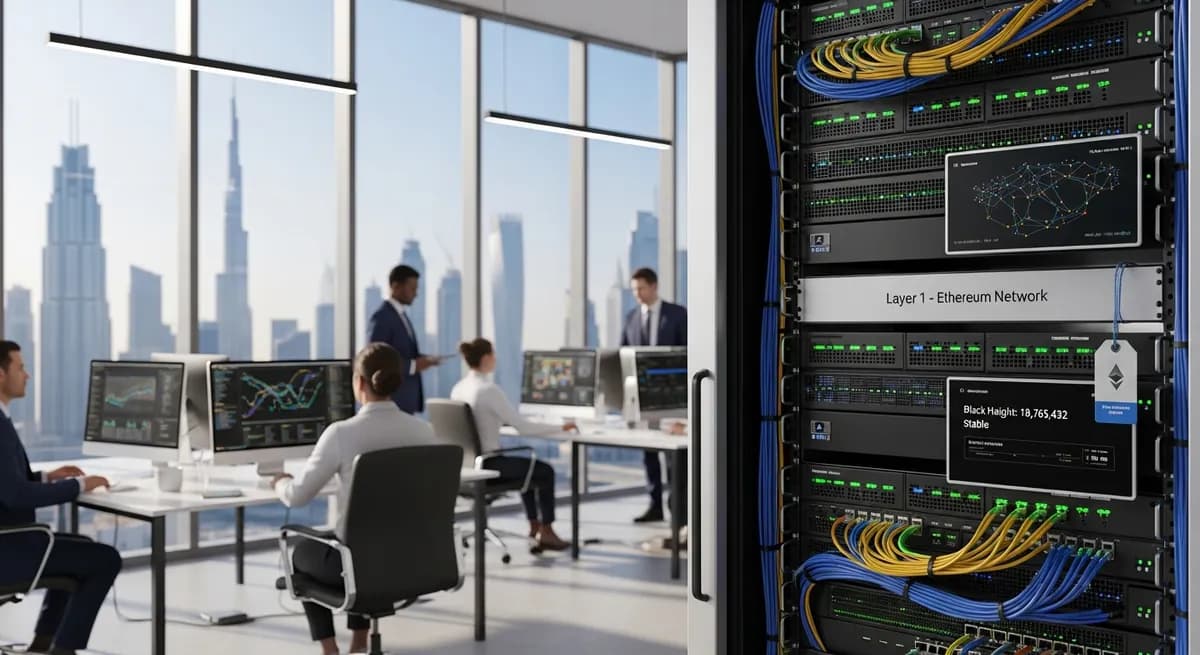
Layer 5: Blockchain Security#
What It Is: Security of underlying blockchain network hosting tokens.
Security Measures:
- Network Security: Proof-of-stake or proof-of-work consensus
- Network Decentralization: Sufficient validators/miners
- Network Uptime: High availability and reliability
- Transaction Finality: Irreversible transactions
- Network Audits: Security reviews of blockchain infrastructure
What to Check:
- ✅ What blockchain network is used?
- ✅ Is network secure and decentralized?
- ✅ What is network uptime?
- ✅ Are transactions final and irreversible?
Red Flags:
- ⚠️ New or untested blockchain
- ⚠️ Low decentralization
- ⚠️ Frequent network outages
Best Practice: Prefer established blockchains (Ethereum, Polygon) with proven security.
Architecture Considerations: The choice between public vs private blockchain and Layer 1 vs Layer 2 significantly impacts security model and costs:
- Public vs Private Blockchain for Asset Tokenization - Architecture comparison
- Layer 1 vs Layer 2 for Security Tokens - Scaling solution comparison
Security Evaluation Checklist#
Use this checklist when evaluating platform security:
Custody#
- Qualified custodian holds assets
- Custodian is licensed/regulated
- Assets are fully insured
- Regular custody audits performed
- Assets in segregated accounts
Smart Contracts#
- Contracts audited by reputable firms
- Audit reports publicly available
- Bug bounty program exists
- Standard token standards used
- Upgrade mechanisms secure
Regulatory Compliance#
- Platform holds required licenses
- Licenses verified with regulators
- KYC/AML procedures robust
- Investor accreditation verified
- Regulatory filings current
Operational Security#
- Security certifications (SOC 2, ISO 27001)
- Multi-factor authentication required
- Data encrypted at rest and in transit
- 24/7 security monitoring
- Incident response plan exists
- Regular penetration testing
Blockchain Security#
- Established blockchain network
- Network secure and decentralized
- High network uptime
- Transactions final and irreversible
Common Security Risks#
Risk 1: Unqualified Custodian#
What It Is: Platform uses unlicensed or unqualified custodian for assets.
Impact: Assets may be lost, stolen, or mismanaged with no recourse.
Mitigation: Verify custodian licenses independently. Check insurance coverage.
Risk 2: Unaudited Smart Contracts#
What It Is: Smart contracts have not been security audited.
Impact: Bugs or vulnerabilities can lead to token loss or theft.
Mitigation: Only invest in platforms with audited contracts from reputable firms.
Risk 3: Regulatory Non-Compliance#
What It Is: Platform operates without required licenses or violates regulations.
Impact: Regulators can shut down platform, freezing assets and preventing withdrawals.
Mitigation: Verify licenses with regulators. Check regulatory history.
Risk 4: Weak Access Controls#
What It Is: Platform has poor access controls, allowing unauthorized access.
Impact: Hackers can access accounts, steal tokens, or manipulate transactions.
Mitigation: Verify multi-factor authentication, role-based access, and security monitoring.
Risk 5: No Insurance#
What It Is: Assets or platform operations lack insurance coverage.
Impact: Losses from theft, damage, or operational failures not covered.
Mitigation: Verify insurance coverage for assets and platform operations.
How to Verify Platform Security#
Step 1: Check Regulatory Licenses#
Action: Verify licenses with regulators (SEC, FCA, VARA, etc.)
How:
- Request license numbers from platform
- Verify on regulator websites
- Check for any enforcement actions
Red Flags: Platform can't provide license numbers, licenses not found, enforcement actions
Step 2: Review Smart Contract Audits#
Action: Review audit reports from reputable firms
How:
- Request audit reports
- Verify audit firm reputation
- Check for critical findings
- Ensure findings were addressed
Red Flags: No audits, unknown audit firms, critical findings not addressed
Step 3: Verify Custody Arrangements#
Action: Confirm qualified custodian and insurance
How:
- Request custodian name and license
- Verify custodian licenses
- Check insurance coverage amounts
- Review custody agreements
Red Flags: No qualified custodian, unlicensed custodian, insufficient insurance
Step 4: Check Security Certifications#
Action: Verify security certifications (SOC 2, ISO 27001)
How:
- Request certification reports
- Verify certification validity
- Review security controls
- Check for any exceptions
Red Flags: No certifications, expired certifications, significant exceptions
Step 5: Review Incident History#
Action: Check for past security incidents
How:
- Search for news/articles
- Check regulator enforcement actions
- Review platform disclosures
- Ask platform directly
Red Flags: Past hacks, regulatory actions, lack of transparency
Security Best Practices for Investors#
Before Investing#
-
Verify Everything: Don't trust platform claims. Verify licenses, audits, and insurance independently.
-
Start Small: Invest small amounts initially to test platform security and operations.
-
Read Documentation: Review security documentation, audit reports, and terms of service.
-
Check References: Speak with existing investors about their security experience.
-
Understand Risks: Understand all security risks and how platform mitigates them.
While Investing#
-
Use Strong Security: Enable multi-factor authentication, use strong passwords, secure devices.
-
Monitor Activity: Regularly check account activity and transaction history.
-
Keep Records: Maintain records of investments, transactions, and communications.
-
Stay Informed: Monitor platform updates, security announcements, and regulatory changes.
-
Report Issues: Report security concerns or incidents immediately.
After Investing#
-
Verify Receipts: Confirm token receipt and verify on blockchain.
-
Monitor Value: Track asset value and token performance.
-
Review Reports: Review custody reports, audit reports, and financial statements.
-
Stay Updated: Keep informed about platform security updates and changes.
Platform Security Comparison#
| Security Feature | High Security | Medium Security | Low Security |
|---|---|---|---|
| Custody | Qualified custodian, full insurance | Qualified custodian, partial insurance | Platform custody, no insurance |
| Smart Contracts | Audited by top firms, bug bounty | Audited by reputable firms | No audits or unknown auditors |
| Regulatory | Multiple licenses, strong compliance | Single license, basic compliance | No licenses or weak compliance |
| Operations | SOC 2, ISO 27001, 24/7 monitoring | Basic certifications | No certifications |
| Blockchain | Established network, high security | Established network | New or untested network |
Frequently Asked Questions#
Q: How do I know if a platform is secure? A: Verify licenses, review audit reports, check custody arrangements, verify insurance, and check security certifications. Don't rely solely on platform claims.
Q: What happens if platform is hacked? A: Impact depends on security measures. With proper custody and insurance, losses may be covered. Without proper security, losses may be total.
Q: Are tokenized assets insured? A: Depends on platform. High-security platforms use qualified custodians with insurance. Verify insurance coverage before investing.
Q: Can smart contracts be hacked? A: Yes, if not properly secured. Only invest in platforms with audited smart contracts from reputable firms.
Q: What if platform loses regulatory license? A: Platform may be shut down, assets frozen, and withdrawals prevented. Verify licenses and regulatory compliance before investing.
Q: How do I verify platform security? A: Check licenses with regulators, review audit reports, verify custody arrangements, check certifications, and review incident history.
Q: Should I trust platform security claims? A: No. Always verify independently. Check licenses, audits, insurance, and certifications yourself.
Q: What is most important security factor? A: Regulatory compliance is critical. After that, custody, smart contract security, and operational security are equally important.
Conclusion#
Platform security is critical for protecting your investment. Evaluate custody, smart contracts, regulatory compliance, operational security, and blockchain security before investing. Verify all security claims independently. Start with small investments to test platform security.
Tokenization Platform Resources#
🎯 Central Hub:
→ Best Tokenization Platforms 2025: Enterprise Guide — Complete platform analysis
Deep-Dive Authority Guides#
Security & Compliance (Related):
- Custody Models in Tokenization Platforms — Bank-grade custody deep-dive
- Regulatory Landscape 2025 — Global compliance framework
Financial Analysis:
- ROI & Financial Modeling — Enterprise decision framework
- Enterprise Costs 2025 — Cost breakdown
Risk Management:
- Why Platforms Fail — Security failures and lessons
Platform Selection#
- Platform Comparison 2025 — Feature matrix
- How to Choose: 15 Factors — Selection framework
- Best Platforms by Use Case — Asset-specific guide
Technical Resources#
- Platform Architecture — Technical infrastructure
- API Integration Guide — Developer documentation
- Smart Contract Audit Checklist — Security audit framework
Additional Security Resources#
- Blockchain Security & Token Technology - Technical reference
- Blockchain Security Best Practices - Security best practices
Next Steps:
- Contact Pedex to learn about our security measures
- Schedule a Security Consultation - Get expert guidance
Last updated: January 2025. Security practices evolve continuously.