

How to Invest in Tokenized Assets: Complete 2025 Guide
Tokenized assets represent one of the most significant shifts in investment accessibility since the advent of ETFs. By converting real-world assets—from commercial real estate to private equity—into digital tokens on blockchain networks, tokenization democratizes access to previously exclusive investment opportunities.
This comprehensive guide covers everything you need to know about investing in tokenized assets, from understanding the fundamentals to building a diversified portfolio and maximizing returns.
For foundational context, see our Ultimate Guide to Tokenization and RWA. New to RWAs? Read What are RWAs? Real World Assets Crypto Explained. For RWA-specific investing, see our comprehensive How to Invest in Tokenized Real World Assets guide. Learn fund strategies in our Tokenized Investment Funds guide, and explore banking applications in our RWA in Banking guide.
Table of Contents#
- What Are Tokenized Assets?
- Why Invest in Tokenized Assets?
- How Tokenized Investing Works
- Getting Started: Step-by-Step Process
- Building Your Tokenized Portfolio
- Understanding Returns and Risks
- Choosing the Right Platform
- Minimum Investment Requirements
- Tax and Regulatory Considerations
- Security and Custody
- Common Questions
What Are Tokenized Assets?#
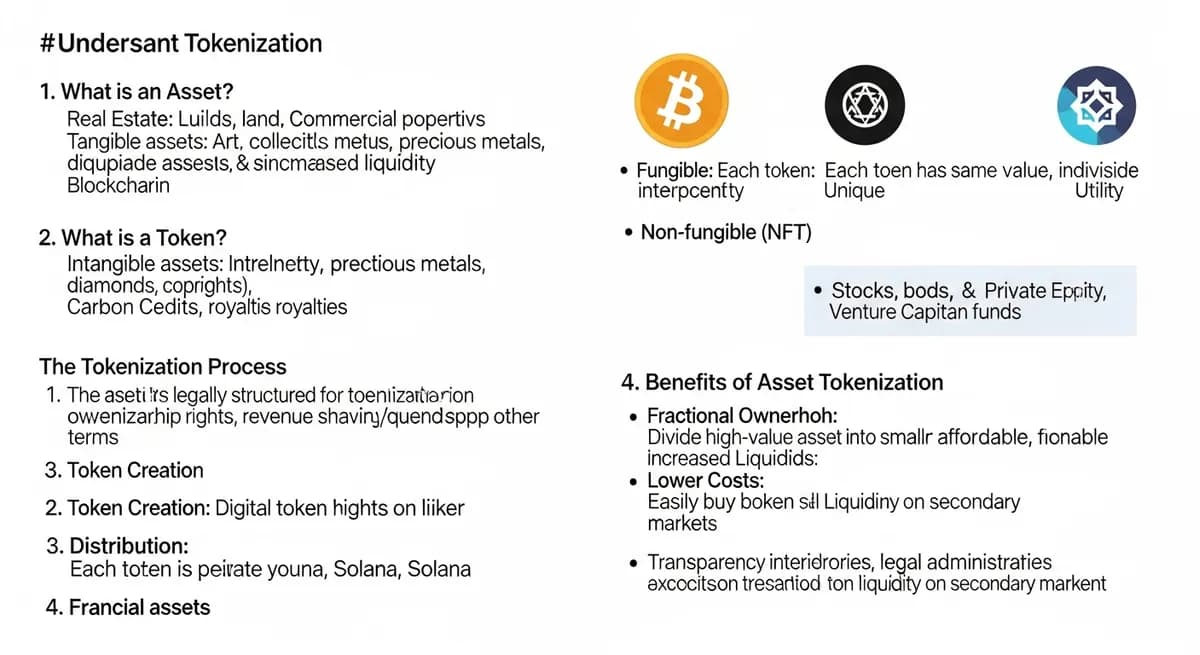
Tokenized assets are digital representations of real-world assets (RWAs) issued on blockchain networks. Each token represents fractional ownership of the underlying asset, enabling investors to own portions of assets that traditionally required significant capital.
Key Characteristics#
Fractional Ownership: Instead of buying an entire property or security, you purchase tokens representing a fraction. For example, a $10 million commercial building might be divided into 10,000 tokens, each worth $1,000.
Blockchain-Based: Tokens are issued on blockchain networks (typically Ethereum, Polygon, or other compliant chains), providing transparency, immutability, and programmability.
Regulatory Compliance: Most tokenized assets are issued as security tokens, complying with SEC, FINMA, or other regulatory frameworks depending on jurisdiction.
24/7 Trading: Unlike traditional markets, tokenized assets can trade on secondary markets around the clock, providing enhanced liquidity.
Automated Distributions: Smart contracts automatically distribute rental income, dividends, or other cash flows to token holders based on their ownership percentage.
Asset Types Available for Tokenization#
- Real Estate: Commercial properties, residential buildings, REITs, land
- Securities: Private equity, venture capital funds, bonds, stocks
- Commodities: Precious metals, agricultural products, energy
- Infrastructure: Roads, bridges, utilities, renewable energy projects
- Intellectual Property: Patents, royalties, brand licensing
- Art & Collectibles: Fine art, rare collectibles, luxury goods
For a deeper dive into the fundamentals, see our Introduction to Asset Tokenization and What is Asset Tokenization? The Ultimate 2025 Beginner's Guide.
Why Invest in Tokenized Assets?#
1. Lower Barriers to Entry#
Traditional real estate investments often require $100,000+ minimums. Tokenized assets can start as low as $100-$1,000, making premium investments accessible to retail investors.
Example: A $50 million commercial property tokenized into 50,000 tokens means you can invest $1,000 for 0.002% ownership—impossible with traditional real estate.
2. Enhanced Diversification#
Tokenization enables you to build a diversified portfolio across:
- Asset Classes: Real estate, securities, commodities, infrastructure
- Geographies: Properties in Dubai, bonds in Europe, startups in Silicon Valley
- Sectors: Technology, healthcare, real estate, energy
- Risk Profiles: Conservative (bonds) to aggressive (venture capital)
Our guide on Building a Tokenized Investment Portfolio covers diversification strategies in detail.
3. Improved Liquidity#
Traditional real estate and private equity investments are illiquid—selling can take months or years. Tokenized assets trade on secondary markets, providing:
- 24/7 Trading: Buy and sell anytime
- Faster Settlement: Blockchain enables near-instant settlement
- Lower Transaction Costs: No intermediaries, reduced fees
- Global Access: Trade with investors worldwide
4. Transparency and Trust#
Blockchain provides:
- Immutable Records: Ownership history cannot be altered
- Real-Time Performance: Track asset performance, distributions, and valuations
- Smart Contract Automation: Automated compliance, distributions, and governance
- Audit Trail: Complete transaction history
5. Passive Income Potential#
Many tokenized assets generate regular income:
- Real Estate: Rental income distributed monthly or quarterly
- Bonds: Interest payments
- Equity: Dividends
- Infrastructure: Revenue sharing
- Treasuries: 5%+ government-backed yields
See our analysis of Tokenized Asset Investment Returns: Real Data from 2024 for actual performance metrics.
NEW: For a complete breakdown of passive income strategies earning 5-15% APY, see our 10 Ways to Earn Passive Income with Tokenized Assets guide.
6. Regulatory Protection#
Security tokens comply with securities regulations, providing:
- Investor Protections: KYC/AML compliance, accredited investor verification
- Legal Framework: Clear ownership rights and legal recourse
- Regulatory Oversight: Subject to SEC, FINMA, or other authorities
- Disclosure Requirements: Regular reporting and transparency
How Tokenized Investing Works#
The Investment Lifecycle#
1. Asset Selection & Tokenization
- Asset owner selects a tokenization platform
- Legal structure is established (SPV, trust, or fund)
- Asset is valued and divided into tokens
- Smart contracts are deployed on blockchain
- Regulatory approvals are obtained
2. Token Offering
- Tokens are offered to investors (primary market)
- Investors complete KYC/AML verification
- Investment is made (fiat or crypto)
- Tokens are minted and transferred to investor wallets
3. Ongoing Management
- Asset performance is tracked and reported
- Income distributions are automated via smart contracts
- Governance decisions are made (if applicable)
- Valuations are updated regularly
4. Secondary Trading
- Investors can trade tokens on secondary markets
- Trades are executed peer-to-peer or via exchanges
- Ownership is transferred instantly on blockchain
- Regulatory compliance is maintained
5. Exit or Redemption
- Asset may be sold, and proceeds distributed to token holders
- Or tokens may be redeemed for underlying asset value
- Exit strategies vary by asset type and structure
For a detailed step-by-step guide, see How to Start Investing in Tokenized Assets: 2025 Step-by-Step Guide.
Getting Started: Step-by-Step Process#
Step 1: Education (Week 1-2)#
Before investing, educate yourself:
Learn the Basics:
- Understand tokenization mechanics
- Research different asset types
- Study regulatory requirements
- Review platform options
Recommended Reading:
- Introduction to Asset Tokenization
- What is Asset Tokenization? The Ultimate 2025 Beginner's Guide
- Beginner's Guide to Investing in Tokenized Assets
Step 2: Choose a Platform (Week 2-3)#
Select a tokenization platform that:
- Supports your target asset types
- Operates in your jurisdiction
- Has strong security and compliance
- Offers good user experience
Key Considerations:
- Regulatory compliance (SEC, FINMA, etc.)
- Supported asset types
- Minimum investment requirements
- Fee structure
- Secondary market availability
- Custody solutions
See our Best Tokenization Platforms 2025 Buyer's Guide and How to Choose a Tokenization Platform: 15 Factors for detailed comparisons.
Step 3: Complete KYC/AML (Week 3)#
Most platforms require:
- Identity verification (passport, driver's license)
- Proof of address
- Accredited investor verification (if required)
- Source of funds documentation
Accredited Investor Requirements (US):
- Net worth: $1M+ (excluding primary residence)
- Annual income: $200K+ ($300K+ joint) for 2 years
- Professional certifications (Series 7, 65, 82)
Step 4: Fund Your Account (Week 3-4)#
Deposit funds via:
- Bank Transfer: ACH, wire transfer
- Crypto: USDC, USDT, ETH (on some platforms)
- Credit Card: Limited availability, higher fees
Step 5: Select Investments (Week 4+)#
Choose assets based on:
- Risk Tolerance: Conservative to aggressive
- Investment Horizon: Short-term vs. long-term
- Income Needs: Growth vs. income generation
- Diversification Goals: Geographic, sector, asset class
Start Small: Begin with smaller investments to learn the platform and understand tokenized asset behavior.
Step 6: Monitor and Manage#
- Track performance regularly
- Review distributions
- Rebalance portfolio as needed
- Stay informed about regulatory changes
Building Your Tokenized Portfolio#
Portfolio Construction Principles#
1. Diversification
Spread investments across:
- Asset Classes: Real estate (40%), securities (30%), commodities (20%), infrastructure (10%)
- Geographies: US (40%), Europe (30%), Asia (20%), Middle East (10%)
- Sectors: Technology, healthcare, real estate, energy, finance
- Risk Levels: Conservative (40%), moderate (40%), aggressive (20%)
2. Risk Management
- Position Sizing: Limit individual positions to 5-10% of portfolio
- Correlation Analysis: Avoid over-concentration in correlated assets
- Liquidity Planning: Maintain some liquid positions for opportunities
- Exit Strategy: Plan exit scenarios for each investment
3. Income vs. Growth
- Income-Focused: Real estate, bonds, infrastructure (target 6-10% yield)
- Growth-Focused: Venture capital, startups, tech (target 15-25% IRR)
- Balanced: Mix of both (target 10-15% total return)
For comprehensive portfolio strategies, see Building a Tokenized Investment Portfolio: Diversification Strategies.
Sample Portfolio Allocations#
Conservative Portfolio (Target: 6-8% annual return)
- 50% Tokenized Real Estate (REITs, commercial properties)
- 30% Tokenized Bonds (corporate, government)
- 20% Tokenized Infrastructure (utilities, renewable energy)
Moderate Portfolio (Target: 10-12% annual return)
- 40% Tokenized Real Estate
- 30% Tokenized Private Equity
- 20% Tokenized Commodities
- 10% Tokenized Startups
Aggressive Portfolio (Target: 15-20% annual return)
- 30% Tokenized Venture Capital
- 30% Tokenized Startups
- 25% Tokenized Real Estate (development projects)
- 15% Tokenized Private Equity
Understanding Returns and Risks#
Expected Returns#
Based on 2024 data, tokenized asset returns vary by type:
Real Estate: 8-12% annual return (rental yield + appreciation)
- Rental yield: 4-6%
- Appreciation: 4-6%
Private Equity: 12-18% IRR (over 5-7 years)
- Early-stage: 15-25% IRR (higher risk)
- Growth-stage: 12-18% IRR (moderate risk)
- Buyout: 10-15% IRR (lower risk)
Bonds: 4-8% yield (depending on credit quality)
- Investment-grade: 4-6%
- High-yield: 6-8%
Commodities: Variable (depends on market cycles)
- Precious metals: 5-10% long-term
- Energy: Highly volatile
See our detailed analysis: Tokenized Asset Investment Returns: Real Data from 2024.
Risks to Consider#
1. Market Risk
- Asset values fluctuate with market conditions
- Real estate markets can decline
- Equity markets are volatile
2. Liquidity Risk
- Secondary markets may be thin
- Selling may take time or require discounts
- Some assets have lock-up periods
3. Regulatory Risk
- Regulations may change
- Jurisdictional differences
- Compliance requirements may increase
4. Technology Risk
- Smart contract vulnerabilities
- Blockchain network issues
- Platform failures
5. Counterparty Risk
- Asset manager performance
- Custodian reliability
- Platform solvency
6. Operational Risk
- Asset management issues
- Distribution delays
- Reporting errors
Mitigation Strategies:
- Diversify across assets and platforms
- Use reputable platforms with strong security
- Understand regulatory frameworks
- Maintain emergency liquidity
- Review platform audits and compliance
Choosing the Right Platform#
Platform Comparison Criteria#
1. Regulatory Compliance
- Licensed in your jurisdiction
- SEC, FINMA, or equivalent registration
- KYC/AML compliance
- Investor protection measures
2. Asset Selection
- Types of assets available
- Geographic coverage
- Minimum investment amounts
- Secondary market availability
3. Security & Custody
- Institutional-grade custody
- Multi-signature wallets
- Insurance coverage
- Security audits
4. Fees
- Platform fees (typically 1-3% annually)
- Transaction fees
- Withdrawal fees
- Performance fees (if applicable)
5. User Experience
- Intuitive interface
- Mobile app availability
- Customer support quality
- Educational resources
6. Technology
- Blockchain network (Ethereum, Polygon, etc.)
- Smart contract audits
- API availability
- Integration capabilities
See our comprehensive Tokenization Platform Comparison 2025 for detailed platform reviews.
Top Platforms to Consider#
Pedex: Institutional-grade platform with global reach, supporting real estate, securities, and infrastructure tokenization.
Securitize: US-focused platform specializing in private equity and venture capital tokenization.
Polymath: Technology platform enabling asset owners to tokenize securities.
Coinbase Asset Hub: Coinbase's platform for tokenized securities.
tZERO: Trading platform for security tokens.
Minimum Investment Requirements#
Minimum investments vary significantly:
Real Estate: $1,000 - $10,000 (typically $5,000)
- Residential properties: $1,000 - $5,000
- Commercial properties: $5,000 - $25,000
- REITs: $1,000 - $10,000
Private Equity: $10,000 - $100,000
- Venture capital: $25,000 - $100,000
- Growth equity: $10,000 - $50,000
- Buyout funds: $50,000 - $250,000
Bonds: $1,000 - $10,000
- Corporate bonds: $1,000 - $5,000
- Government bonds: $1,000 - $10,000
Commodities: $500 - $5,000
- Precious metals: $1,000 - $5,000
- Energy: $5,000 - $25,000
For detailed minimums by asset type, see Minimum Investment in Tokenized Real Estate.
Tax and Regulatory Considerations#
Tax Treatment#
United States:
- Tokenized assets are typically treated as securities
- Capital gains tax applies to sales
- Income distributions are taxable
- 1031 exchanges may apply to real estate
Europe:
- Varies by country
- Some jurisdictions offer tax incentives
- VAT may apply to certain transactions
Middle East:
- Many jurisdictions offer tax-free or low-tax structures
- Dubai, UAE: No capital gains or income tax
- Saudi Arabia: Tax-free for certain structures
See our Tokenization Tax Guide 2025 for comprehensive tax information.
Regulatory Framework#
United States:
- SEC regulates security tokens
- Regulation D (private placements)
- Regulation A+ (public offerings up to $75M)
- Regulation S (offshore offerings)
Europe:
- MiCA (Markets in Crypto-Assets) regulation
- National securities laws
- EU passporting rights
Middle East:
- VARA (Dubai Virtual Assets Regulatory Authority)
- ADGM (Abu Dhabi Global Market)
- QFC (Qatar Financial Centre)
For regulatory details, see Tokenization Licensing Requirements by Jurisdiction 2025.
Security and Custody#
Security Best Practices#
1. Platform Security
- Multi-signature wallets
- Cold storage for majority of assets
- Regular security audits
- Insurance coverage
2. Personal Security
- Use hardware wallets for large holdings
- Enable two-factor authentication
- Never share private keys
- Use reputable platforms only
3. Custody Solutions
- Institutional custodians (Coinbase Custody, BitGo)
- Self-custody (for advanced users)
- Hybrid approaches
See our Tokenization Platform Security: What Investors Need to Know for detailed security guidance.
Common Questions (FAQ)#
How do I get started investing in tokenized assets?#
- Educate yourself about tokenization
- Choose a reputable platform
- Complete KYC/AML verification
- Fund your account
- Select your first investment
- Monitor and manage your portfolio
See our How to Start Investing in Tokenized Assets: 2025 Step-by-Step Guide for detailed instructions.
What is the minimum investment?#
Minimums vary by asset type and platform, typically ranging from $1,000 to $25,000. Real estate often starts at $5,000, while private equity may require $25,000+.
Are tokenized assets safe?#
Tokenized assets are subject to the same risks as traditional investments (market, liquidity, regulatory) plus technology risks. However, reputable platforms implement strong security measures, regulatory compliance, and insurance coverage.
How do I receive income from tokenized assets?#
Income distributions (rental income, dividends, interest) are automatically distributed to token holders via smart contracts, typically monthly or quarterly, based on your ownership percentage.
Can I sell my tokens?#
Yes, most tokenized assets can be sold on secondary markets. Liquidity varies by asset type and platform. Some assets may have lock-up periods.
What are the tax implications?#
Tax treatment varies by jurisdiction. In the US, tokenized assets are typically treated as securities, subject to capital gains and income tax. See our Tokenization Tax Guide 2025 for details.
Do I need to be an accredited investor?#
Requirements vary by jurisdiction and asset type. In the US, many tokenized securities require accredited investor status, though some platforms offer Regulation A+ offerings available to all investors.
How do I choose the right platform?#
Consider regulatory compliance, asset selection, security, fees, user experience, and technology. See our Best Tokenization Platforms 2025 Buyer's Guide for comparisons.
Next Steps#
Now that you understand the fundamentals of investing in tokenized assets, here are your next steps:
-
Deepen Your Knowledge: Read our cluster articles on specific topics:
- 10 Ways to Earn Passive Income with Tokenized Assets (Up to 15% APY) - NEW
- Tokenized Treasury Bonds: The $1 Trillion Opportunity - NEW
- How to Start Investing in Tokenized Assets: 2025 Step-by-Step Guide
- Building a Tokenized Investment Portfolio: Diversification Strategies
- Tokenized Asset Investment Returns: Real Data from 2024
- Minimum Investment in Tokenized Real Estate
- Family Office Digital Asset Management
-
Choose a Platform: Research and compare platforms using our guides:
-
Understand Security: Learn about platform security and best practices:
-
Start Investing: Once you're ready, create an account on a reputable platform and make your first investment.
Ready to start your tokenized asset investment journey?
Create your Pedex account in 2 minutes and explore available investment opportunities. Our platform offers institutional-grade security, regulatory compliance, and access to premium tokenized assets across real estate, securities, and infrastructure.
This guide is for educational purposes only and does not constitute financial advice. Always conduct your own research and consult with financial advisors before making investment decisions.