Residential Property Fractionalization: How It Works
Residential real estate guide: This article covers residential fractionalization. For comprehensive RWA guidance, see Tokenizing Real-World Assets: Real Estate, Supply Chain & Finance in 2025.
The residential real estate market faces a critical accessibility problem: median home prices exceed $400,000 in major cities, pricing out average investors. Residential property fractionalization is solving this by enabling multiple investors to own portions of premium properties. This guide explains the complete process.
For comprehensive understanding of tokenization frameworks, see our Ultimate Guide to Tokenization and RWA. Learn more about real estate tokenization strategies in our Real Estate Tokenization guide.
What is Residential Property Fractionalization?#
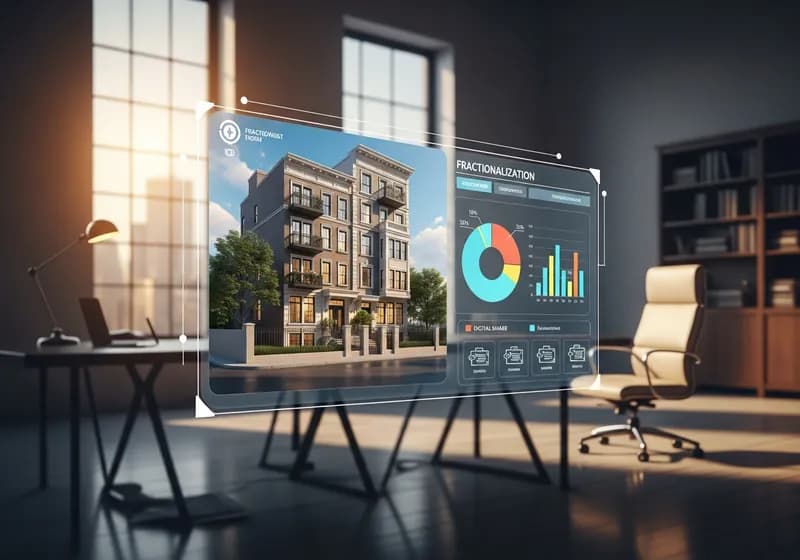
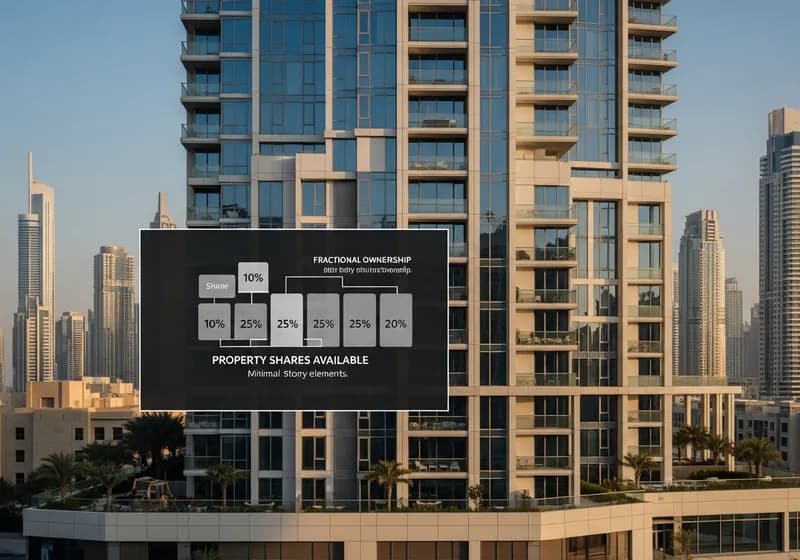
Residential property fractionalization is the division of ownership rights in a single residential property among multiple investors through tokenization. Instead of one buyer purchasing a $500,000 home, 500 investors can each own a fractional token representing $1,000 of ownership.
Key Benefits#
Democratized Ownership: Invest in residential real estate with $500-$5,000 Diversification: Own fractional stakes in multiple properties Passive Income: Receive rental distributions automatically Liquidity: Trade fractional ownership on secondary markets Transparency: Blockchain-verified ownership records
Types of Residential Properties for Fractionalization#
Single-Family Rental Properties#
Profile:
- 3-4 bedroom homes
- $300K-$800K value range
- Stable tenant markets
- 7-10% annual rental yield
Token Structure:
- 500-2,000 tokens per property
- $500-$2,000 per token
- Minimum investment: $1,000-$5,000
- Hold period: 3-5 years
Target Investors: Individual home buyers, small portfolios
Multi-Family Residential (2-4 Unit)#
Profile:
- Duplex or triplex properties
- $400K-$1.2M value
- Higher rental yields 8-12%
- Operational economies of scale
Token Structure:
- 1,000-4,000 tokens
- $1,000-$3,000 per token
- Diversified tenant base
- Monthly distributions
Target Investors: Real estate investors, income seekers
Luxury Residential Properties#
Profile:
- High-end single-family homes
- $1M-$5M+ value
- Exclusive neighborhoods
- 4-7% appreciation-focused
Token Structure:
- 2,000-10,000 tokens
- $5,000-$10,000 per token
- Accredited investor requirement
- Annual distributions
Target Investors: Institutional investors, family offices
Step-by-Step Residential Fractionalization Process#
Step 1: Property Acquisition & Preparation#
Property Selection Criteria:
- Location: Major metropolitan areas (top 50 MSAs)
- Condition: Move-in ready or minimal improvements needed
- Market: Strong rental demand and appreciation
- Financials: Positive cash flow potential
Legal Preparation:
- Title insurance and survey completion
- Inspection and appraisal
- Tax and zoning verification
- HOA review (if applicable)
Step 2: SPV Creation & Structure#
Special Purpose Vehicle (SPV) Setup:
- Form LLC in investor-friendly jurisdiction
- Define ownership structure
- Establish governance documents
- Register for tax purposes
Ownership Framework:
- SPV holds residential property
- SPV issues fractional tokens
- Each token = proportional ownership
- Voting rights distributed
Example Structure:
$500,000 Residential Property
↓
SPV LLC (Created)
↓
5,000 Tokens Issued @ $100/token
↓
Distributed to 500 Investors (10 tokens each)
Step 3: Professional Valuation#
Appraisal Components:
- Income capitalization (rental analysis)
- Market comparison (comps analysis)
- Cost approach (construction + land)
- Fair market value determination
Valuation Inputs:
- Annual rental income: $36,000
- Operating expenses: $10,800 (30%)
- Net operating income: $25,200
- Cap rate: 5%
- Property value: $504,000
Step 4: Token Design & Economics#
Token Specifications:
Name: ResidentalProperty-TokenName Supply: 5,000 tokens Price: $100/token (minimum $500,000 raise) Type: ERC-3643 security token
Revenue Distribution:
- Gross rent: 100% to token holders
- Less: Property taxes (0.8%)
- Less: Insurance (0.5%)
- Less: Maintenance (2%)
- Less: Management (8%)
- Net distribution to holders: ~88.7%
Annual Cash Flow Example:
Annual Rental Income:           $36,000
Less: Property taxes:           ($2,880)
Less: Insurance:                ($1,800)
Less: Maintenance/Repairs:      ($7,200)
Less: Property management:      ($2,880)
────────────────────────────────────────
Net Operating Income:           $21,240

Per Token Annual Distribution:  $4.25
Annual Yield:                   4.25%
Step 5: Compliance & Legal Documentation#
Securities Compliance:
- SEC Regulation D (Accredited investor offering)
- Private placement memorandum (PPM)
- Investor accreditation verification
- Terms and conditions
Required Documents:
- Offering document
- Token terms
- Investor agreements
- Distribution policy
- Governance framework
Step 6: Smart Contract Development#
Smart Contract Functions:
Token Distribution:
- Automatic token issuance upon investment
- KYC verification gates
- Anti-money laundering checks
- Transfer restrictions enforcement
Rental Income Distribution:
- Monthly rent collection
- Expense deduction automation
- Pro-rata distribution calculation
- Automatic token holder payment
Voting Mechanisms:
- Refinancing approval votes
- Major expense decisions
- Refinance or sale votes
- Amendment approvals
Step 7: Marketing & Investor Acquisition#
Target Investor Profile:
- Net worth: $250K-$2M+
- Investment horizon: 3-5+ years
- Income requirement: $200K+ annually
- Interest in real estate income
Marketing Channels:
- Real estate investment platforms
- Accredited investor networks
- Social media (LinkedIn, Twitter)
- Financial advisor referrals
- Email campaigns
Investor Acquisition Costs: $300-$1,000 per investor
Step 8: Token Sales & Closing#
Offering Timeline:
- Soft launch: 1-2 weeks
- Marketing period: 4-8 weeks
- Hard close: When fully subscribed or deadline reached
- Closing/funding: 1-2 weeks after close
Investor Workflow:
- Complete accreditation verification
- Review offering documents
- Complete KYC/AML
- Transfer investment funds
- Receive security tokens
- Set up automated distributions
Real-World Example: $600K Single-Family Home#
Property Details:
- Location: Austin, Texas
- Type: 3-bed/2-bath
- Market value: $600,000
- Rental income: $3,000/month ($36,000/year)
Tokenization Structure:
- Total tokens: 6,000
- Price per token: $100
- Minimum investment: $500
- Token holders: 300-500 investors
Annual Cash Flows (Year 1):
Gross Rental Income:            $36,000
Property tax (1.2%):            ($7,200)
Insurance (0.4%):               ($2,400)
Maintenance (2%):               ($12,000)
Management (8%):                ($2,880)
Utilities & misc (1%):          ($360)
────────────────────────────
Net Operating Income:           $11,160

Per Token Distribution:         $1.86
Annual Yield:                   1.86%

Note: Does not include appreciation
Extended Projection (5-Year Horizon):
| Year | Property Value | Annual Net Income | Per Token Value |
|---|---|---|---|
| 1 | $600,000 | $11,160 | $100.00 |
| 2 | $630,000 (+5%) | $11,718 | $105.00 |
| 3 | $661,500 (+5%) | $12,304 | $110.25 |
| 4 | $694,575 (+5%) | $12,919 | $115.76 |
| 5 | $729,304 (+5%) | $13,565 | $121.55 |
Total 5-Year Return: 21.55% + cumulative income (~$60K total)
Residential Fractionalization Use Cases#
Use Case 1: First-Time Home Buyer Wealth Building#
Scenario:
- Investor has $5,000 to invest
- Cannot save enough for down payment
- Wants real estate exposure
Fractionalization Solution:
- Invest $5,000 for 5 fractional units (various properties)
- Build real estate portfolio gradually
- Receive monthly income distributions
- Gain experience before purchasing own home
3-Year Outcome:
- Total investment: $15,000 (adding $5K annually)
- Portfolio value: $16,200 (+8%)
- Income received: $2,100
- Total wealth increase: $3,300 (22%)
Use Case 2: Diversified Portfolio Builder#
Scenario:
- Investor has $100K to diversify
- Wants geographic diversification
- Seeks 5-7% annual income
Fractionalization Solution:
- Invest across 10 properties in different cities
- Average token allocation: $10K per property
- Geographic diversification:
- Austin (3 properties)
- Denver (2 properties)
- Nashville (2 properties)
- Phoenix (3 properties)
Expected Performance:
- Blended annual yield: 6.2%
- Annual income: $6,200
- Downside protection from diversification
Use Case 3: Income-Focused Investor#
Scenario:
- Pre-retiree seeking passive income
- Risk-averse profile
- Wants $2,000-$3,000 monthly income
Fractionalization Solution:
- Invest $500K across 25-30 properties
- Focus on established properties with stable tenants
- Target 6% average yield
- Receive $2,500 monthly distributions
Implementation:
- $15K-$20K per property (diversified)
- $500 minimum per property
- Monthly distributions
- Quarterly reporting
Advantages & Disadvantages#
Advantages#
For Investors:
- ✅ Lower entry barrier ($500-$5,000 vs. $100K+)
- ✅ Geographic diversification
- ✅ Professional management
- ✅ Passive income potential
- ✅ Liquidity (tradeable tokens)
- ✅ Transparent ownership records
For Property Owners/Operators:
- ✅ Access to distributed investor capital
- ✅ Reduced dependency on traditional financing
- ✅ Faster capital raising (weeks vs. months)
- ✅ Lower transaction costs
- ✅ Reach to wider investor base
Disadvantages#
Challenges for Investors:
- ⚠️ Illiquid initial holding period (typically 3-5 years)
- ⚠️ Regulatory uncertainty in some jurisdictions
- ⚠️ Requires accredited investor status (in US)
- ⚠️ Counterparty risk (platform or operator)
- ⚠️ Valuation/liquidity in secondary market uncertain
Challenges for Operators:
- ⚠️ Complex regulatory compliance
- ⚠️ Investor relations management overhead
- ⚠️ Smart contract development costs
- ⚠️ Ongoing reporting requirements
Regulatory Considerations#
United States#
SEC Classification: Security tokens
- Must comply with Regulation D (private placement)
- Form D filing required with SEC
- Annual reporting to investors
- Accredited investor requirements
State Regulations:
- Varies by state
- Some states more progressive (Wyoming, Delaware)
- Licensing requirements emerging
- Legal counsel essential
European Union#
MiCA Compliance: Markets in Crypto-Assets Regulation
- Prospectus directive applies
- KYC/AML requirements strict
- Custody standards high
- Asset segregation required
UAE & GCC#
VARA Guidelines (Virtual Assets Regulatory Authority):
- ADGM/DIFC sandbox programs available
- Clear tokenization framework
- Innovation-friendly approach
- Growing institutional adoption
Risks & Mitigation#
Risk 1: Property Vacancy#
Mitigation:
- Select properties in strong rental markets
- Maintain 2-month reserve fund
- Diversify across multiple properties
- Implement professional property management
Risk 2: Rental Default#
Mitigation:
- Rigorous tenant screening
- Security deposits
- Insurance coverage
- Emergency fund reserves
Risk 3: Market Depreciation#
Mitigation:
- Select appreciating markets
- Focus on core neighborhoods
- Long holding periods
- Diversification across regions
Risk 4: Liquidity Risk#
Mitigation:
- Prepare for 3-5 year holding periods
- Invest only capital not needed short-term
- Secondary market development ongoing
- Growing investor base improves liquidity
Getting Started with Residential Fractionalization#
For Investors#
- Assess Financial Readiness: $1,000-$100,000 available capital
- Understand Risks: Read offering documents thoroughly
- Verify Accreditation: Meet investor requirements
- Choose Platform: Select reputable provider (e.g., Pedex)
- Complete KYC: Identity verification
- Review Properties: Analyze offerings
- Invest: Purchase fractional tokens
- Monitor: Receive monthly distributions
- Manage: Track performance quarterly
For Property Owners#
- Identify Suitable Property: Single/multi-family residential
- Engage Legal Counsel: Tokenization expertise required
- Select Platform: Compare providers
- Prepare Documentation: Offering materials
- Conduct Valuation: Professional appraisal
- Market Offering: Target investors
- Close Sale: Fund token issuance
- Manage Property: Ongoing operations
- Distribute Income: Monthly/quarterly distributions
FAQ#
Q: What's the minimum investment? A: Typically $500-$1,000 per property, or $5,000-$10,000 per investor across multiple properties.
Q: Do I need to be accredited? A: Yes, in the US under Regulation D. Net worth of $1M+ (excluding primary residence) or $200K+ income required.
Q: How often are distributions made? A: Usually monthly or quarterly, depending on the property and platform.
Q: Can I sell my fractional tokens? A: Yes, on secondary markets, though liquidity may be limited initially. Hold periods: 3-5 years typical.
Q: What taxes apply? A: Income taxed as ordinary income. Consult tax advisor for specifics. 1099 documentation provided.
Q: What's the average annual return? A: 4-7% from rental income + 2-5% appreciation potential = 6-12% blended returns.
Conclusion#
Residential property fractionalization is democratizing real estate investment, enabling millions to build wealth through real estate without traditional barriers. With professional management, passive income potential, and geographic diversification, fractional residential tokens offer compelling opportunities for modern investors.
Whether you're a first-time real estate investor or an experienced portfolio manager, residential fractionalization provides an accessible path to real estate wealth building.
Start investing in fractional residential properties today on Pedex.
Learn More: Real-World Assets Tokenization#
Comprehensive RWA Guide:
→ Tokenizing Real-World Assets: Real Estate, Supply Chain & Finance in 2025 - Complete RWA tokenization framework
Real Estate Specialized Guides:
- Real Estate Tokenization: A Complete Guide - Comprehensive real estate guide
- Commercial Real Estate Tokenization: Complete 2025 Guide - CRE strategies
- REITs vs Tokenized Real Estate: Which is Better in 2025? - Investment comparison
- Dubai Real Estate Tokenization: Regulatory Guide & Opportunities - Dubai opportunities
Investment:
- How to Invest in Tokenized Assets: Complete 2025 Guide - Investment guide
- Minimum Investment in Tokenized Real Estate: What You Need - Investment minimums
Next Steps:
- Browse Available Properties - Start investing
- Contact Our Real Estate Team - Get guidance
Ready to invest? Browse Available Properties