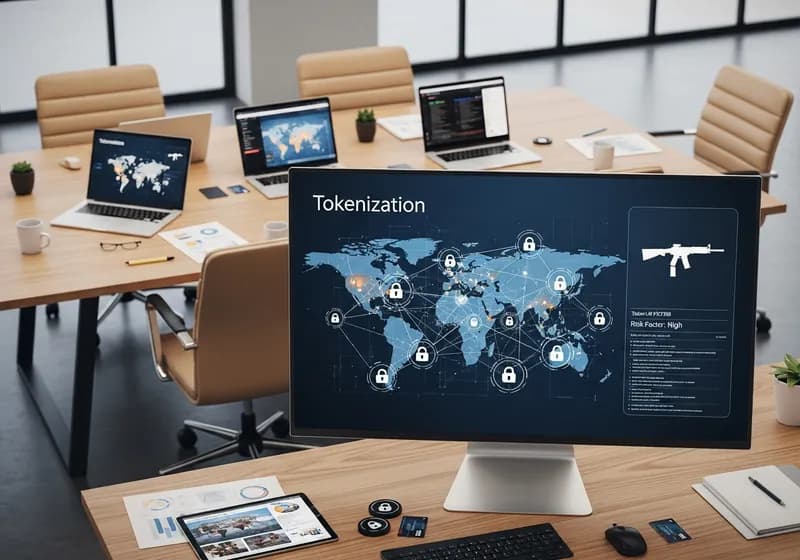


Tokenization as a Geoeconomic Weapon: How Nations Will Conquer Markets Without War
Geopolitical analysis: This article explores tokenization as a strategic tool. For comprehensive geopolitical and strategic analysis, see Tokenization as a Geopolitical Weapon: The New Financial Empire Architecture.
The New Theater of War#
In 1944, the Bretton Woods Conference established the US dollar as the world's reserve currency. This single decision gave America more lasting power than any military victory. For 80 years, dollar dominance has been the foundation of American hegemony.
That foundation is cracking.
For comprehensive context, see our Ultimate Guide to Tokenization and RWA. Explore GCC opportunities in our RWA in GCC Markets guide.
Tokenization—the conversion of real-world assets into blockchain-based digital tokens—represents the most significant threat to dollar dominance since the euro's creation. But unlike the euro, tokenization isn't controlled by any single nation. It's a weapon available to all.
This analysis examines how nation-states are weaponizing tokenization to project economic power, bypass sanctions, and establish new forms of financial sovereignty.
Part I: The Weaponization Framework#
Economic Warfare 3.0#
The evolution of economic warfare:
1.0 - Trade Wars (19th-20th Century) Tariffs, embargoes, blockades. Physical control of goods movement.
2.0 - Financial Wars (1970s-Present) SWIFT exclusion, asset freezes, secondary sanctions. Control through financial infrastructure.
3.0 - Tokenization Wars (Emerging) Alternative settlement rails, tokenized commodities, programmable sovereignty. Control through technological infrastructure.
The Four Vectors of Tokenization Warfare#
Vector 1: Settlement Bypass Creating alternative payment rails that circumvent Western-controlled infrastructure.
Vector 2: Asset Repatriation Tokenizing national assets to prevent foreign seizure and maintain domestic control.
Vector 3: Market Capture Using tokenization to attract global capital flows and establish financial hub status.
Vector 4: Standard Setting Establishing tokenization standards that embed national interests into global infrastructure.
Part II: Case Studies in Tokenization Warfare#
Russia: The Sanctions Laboratory#
Russia has become the world's largest laboratory for sanctions evasion through tokenization.
Initiatives:
- Digital ruble development accelerated post-2022
- Tokenized commodity trading platforms
- Bilateral settlement agreements with China, India, UAE
- Exploration of gold-backed stablecoins
Strategic Logic: Every transaction settled outside SWIFT reduces Western leverage. Tokenized commodities enable price discovery outside dollar-denominated markets.
Effectiveness Assessment: Partial success. Russia has maintained trade flows but at significant efficiency costs. The infrastructure remains immature.
China: The Long Game#
China's approach to tokenization warfare is characteristically patient and comprehensive.
Initiatives:
- Digital yuan (e-CNY) with 260 million wallets
- Blockchain Service Network (BSN) for global infrastructure
- Hong Kong as tokenization regulatory sandbox
- Belt and Road tokenization integration
Strategic Logic: Build infrastructure that makes yuan-denominated tokenized assets the path of least resistance for developing nations.
Effectiveness Assessment: Infrastructure is advanced but adoption lags. The digital yuan has struggled to achieve international usage despite domestic scale.
UAE: The Neutral Hub Strategy#
The UAE has positioned itself as a neutral ground for tokenization—serving all sides while building domestic capability.
Initiatives:
- VARA regulatory framework (world's most comprehensive)
- Dubai as crypto/tokenization hub
- Tokenized real estate programs
- Cross-border CBDC experiments with multiple nations
Strategic Logic: Become indispensable infrastructure for global tokenization, regardless of geopolitical alignment.
Effectiveness Assessment: Highly successful. Dubai has attracted major players from both Western and Eastern blocs.
Singapore: The Institutional Bridge#
Singapore is building tokenization infrastructure specifically designed for institutional adoption.
Initiatives:
- Project Guardian (MAS-led tokenization experiments)
- Regulatory sandboxes for security tokens
- Partnerships with major global banks
- Stablecoin regulatory framework
Strategic Logic: Position as the trusted bridge between traditional finance and tokenized assets.
Effectiveness Assessment: Strong institutional credibility but limited scale compared to more aggressive jurisdictions.
Part III: The Dollar Defense#
America's Counteroffensive#
The US is not passively accepting tokenization challenges to dollar dominance.
Defensive Measures:
- SEC enforcement actions against non-compliant tokenization
- OFAC sanctions on tokenization platforms facilitating evasion
- Stablecoin regulation to maintain dollar primacy in crypto
- FedNow as domestic real-time settlement alternative
Offensive Measures:
- Treasury exploration of tokenized Treasuries
- Support for dollar-denominated stablecoins
- Regulatory frameworks that advantage US-compliant platforms
- International pressure on jurisdictions hosting evasion infrastructure
The Stablecoin Battleground#
Dollar-denominated stablecoins represent both threat and opportunity for US dominance.
The Threat: Stablecoins operate outside Federal Reserve control, potentially undermining monetary policy transmission.
The Opportunity: Stablecoins extend dollar reach into crypto-native economies, potentially strengthening dollar dominance in new domains.
Current Status: US policy remains conflicted, with different agencies pursuing contradictory approaches.
Part IV: The Commodity Tokenization Front#
Oil: The Ultimate Prize#
Whoever controls oil pricing controls global energy markets. Tokenization threatens petrodollar arrangements.
Emerging Developments:
- Russia-China oil trades in yuan
- UAE exploration of non-dollar oil settlement
- Tokenized oil futures on alternative exchanges
- Commodity-backed stablecoins
Implications: If major oil producers accept tokenized settlement outside dollar systems, the foundation of dollar dominance erodes.
Gold: The Ancient Weapon Modernized#
Gold has always been the alternative to fiat currency dominance. Tokenization makes gold more usable.
Emerging Developments:
- Central bank gold accumulation at record levels
- Gold-backed tokens from multiple jurisdictions
- Tokenized gold as settlement medium
- Integration with CBDC systems
Implications: Tokenized gold could serve as neutral settlement medium between competing currency blocs.
Agricultural Commodities: Food as Weapon#
Food security concerns are driving tokenization of agricultural commodities.
Emerging Developments:
- Tokenized grain trading platforms
- Blockchain-based commodity tracking
- Smart contract-based trade finance
- Alternative commodity exchanges
Implications: Nations dependent on food imports are particularly vulnerable to tokenization-based market manipulation.
Part V: The Infrastructure War#
Blockchain as Territory#
In the tokenization era, blockchain infrastructure is strategic territory.
Control Points:
- Validator/node infrastructure
- Bridge protocols between chains
- Oracle networks providing external data
- Layer 2 scaling solutions
Strategic Implications: Nations that control critical blockchain infrastructure can potentially censor, surveil, or manipulate transactions.
The Standards Battle#
Technical standards determine who benefits from tokenization.
Competing Frameworks:
- US/EU: Focus on compliance, KYC/AML integration
- China: BSN standards emphasizing state oversight
- Singapore: Interoperability-focused standards
- UAE: Flexibility-focused, multi-standard approach
Stakes: Standards that become global defaults embed the interests of their creators into permanent infrastructure.
Part VI: Small Nation Strategies#
The Sovereignty Paradox#
For small nations, tokenization presents a paradox: it offers tools for greater sovereignty while potentially increasing vulnerability to larger powers.
Defensive Tokenization#
Small nations can use tokenization defensively:
- Tokenize national assets to prevent foreign seizure
- Create alternative settlement channels
- Build domestic financial infrastructure
- Attract global capital through favorable regulation
The Hub Strategy#
Some small nations are pursuing hub strategies:
- Liechtenstein: Blockchain Act creating legal certainty
- Malta: Early mover in crypto regulation
- Bahrain: Regional fintech hub ambitions
- Estonia: Digital identity and e-residency
Risks#
Small nations pursuing aggressive tokenization strategies face:
- Pressure from major powers
- Reputation risks from illicit usage
- Regulatory arbitrage accusations
- Limited enforcement capacity
Part VII: The Corporate Dimension#
Multinational Corporations as Quasi-States#
Large multinationals are developing tokenization capabilities that rival nation-states.
Corporate Tokenization Initiatives:
- JPMorgan's Onyx platform
- BlackRock's tokenized funds
- Goldman's digital asset platform
- Société Générale's security tokens
Strategic Implications: Corporations with global tokenization infrastructure may become alternative power centers, potentially playing nations against each other.
The Private Currency Question#
Corporate stablecoins and tokenized assets raise questions about private monetary power.
Historical Parallel: The East India Company issued its own currency and maintained its own army. Are we returning to an era of corporate quasi-sovereignty?
Part VIII: Scenario Analysis#
Scenario 1: Dollar Resilience#
Conditions:
- US successfully regulates stablecoins to maintain dollar primacy
- Tokenization develops within dollar-denominated framework
- Alternative systems remain marginal
Probability: 40%
Implications: Tokenization enhances rather than threatens US financial power.
Scenario 2: Multipolar Fragmentation#
Conditions:
- Multiple competing tokenization standards emerge
- Regional blocs develop separate infrastructure
- Interoperability remains limited
Probability: 35%
Implications: Global financial system fragments into competing zones, increasing friction and reducing efficiency.
Scenario 3: Neutral Infrastructure Dominance#
Conditions:
- Neutral hubs (Singapore, UAE, Switzerland) become critical infrastructure
- Interoperability standards enable cross-bloc transactions
- No single power dominates
Probability: 20%
Implications: Power shifts to infrastructure providers rather than currency issuers.
Scenario 4: Corporate Capture#
Conditions:
- Large corporations develop dominant tokenization platforms
- National regulations become secondary to corporate standards
- Private infrastructure supersedes public
Probability: 5%
Implications: Fundamental shift in the nature of sovereignty and state power.
Part IX: Investment Implications#
Positioning for Geopolitical Tokenization#
Investors should consider:
Infrastructure Plays:
- Platforms serving multiple jurisdictions
- Interoperability solutions
- Compliance technology providers
Geographic Diversification:
- Exposure to multiple regulatory regimes
- Assets in neutral jurisdictions
- Hedges against any single nation's dominance
Commodity Exposure:
- Tokenized commodity platforms
- Gold-backed tokens
- Agricultural commodity tokens
Risk Factors#
Regulatory Risk: Any jurisdiction can change rules rapidly.
Sanctions Risk: Secondary sanctions can affect platforms serving sanctioned entities.
Technology Risk: Dominant platforms today may be obsolete tomorrow.
Part X: Conclusion#
The New Great Game#
Tokenization has become a theater of great power competition. Nations are deploying this technology to:
- Project economic power beyond their borders
- Defend against financial warfare
- Attract global capital flows
- Establish standards that embed their interests
The Stakes#
The outcome of tokenization warfare will determine:
- Which currencies remain relevant
- Which nations host critical infrastructure
- How global capital flows
- Who extracts rent from the financial system
The Opportunity#
For those who understand these dynamics, tokenization warfare creates opportunities:
- Positioning in neutral infrastructure
- Arbitrage between competing systems
- Building bridges between blocs
- Serving as trusted intermediaries
The new great game has begun. The weapons are digital. The territory is financial. The stakes are global power.
Continue Reading#
Explore more about tokenization economics and global strategies:
- CBDCs vs Tokenized Assets - The battle for monetary control
- Cross-Border Tokenized Settlement - International payment infrastructure
- Tokenization Regulation & Compliance - Global regulatory frameworks
- Islamic Finance Tokenization - Sharia-compliant opportunities
- Saudi Arabia Tokenization 2025 - Vision 2030 developments
- Dubai Real Estate Tokenization - MENA market leadership
About Pedex#
Pedex provides tokenization infrastructure designed for the multipolar world—compliant across jurisdictions, neutral between powers, and built for the long term.
Learn more: pedex.org
"In the new world order, the most powerful weapon is not the bomb but the blockchain."