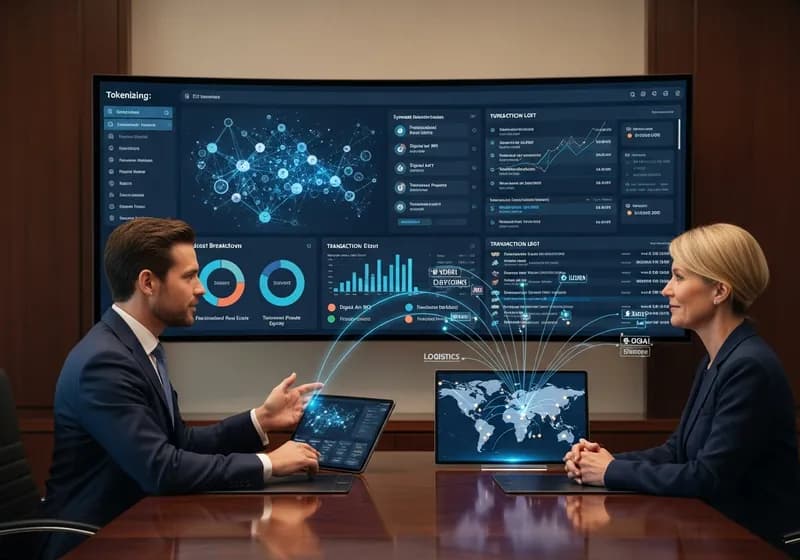


Tokenizing Logistics Assets: Vehicles, Warehouses & Equipment
Logistics asset guide: This article covers logistics tokenization. For comprehensive RWA guidance, see Tokenizing Real-World Assets: Real Estate, Supply Chain & Finance in 2025.
The global logistics industry manages over $20 trillion in physical assets including 2.5 billion vehicles, 5 billion sqft of warehouse space, and trillions in equipment. Yet these assets remain largely illiquid, capital-intensive, and difficult to finance. Tokenization is transforming logistics asset management by creating liquidity, reducing capital requirements, and enabling distributed ownership.
For comprehensive context, see our Ultimate Guide to Tokenization and RWA.
Logistics Assets Market Opportunity#
Asset Classes for Tokenization#
Fleet Vehicles: $2.5B+ USD value
- Commercial trucks (20M units)
- Refrigerated trailers
- Container chassis
- Specialized equipment
Warehouse Facilities: $5B+ USD value
- Distribution centers
- Cold storage facilities
- Fulfillment centers
- Regional hubs
Equipment & Machinery: $3B+ USD value
- Material handling equipment
- Conveyor systems
- Sorting machines
- Loading equipment
Total Addressable Market: $10B+ in tokenizable logistics assets
Why Logistics Asset Tokenization Matters#
For Asset Owners/Operators:
- Unlock liquidity from underutilized assets
- Reduce capital requirements for expansion
- Access capital without traditional lending
- Monetize asset utilization better
- Enable fractional asset ownership models
For Investors:
- Access previously unavailable investment class
- Participate in resilient logistics sector
- Generate passive income from asset utilization
- Benefit from global supply chain growth
- Diversify real estate with operational assets
Fleet Vehicle Tokenization#
Fleet Tokenization Fundamentals#
Commercial fleet vehicles represent the largest tokenizable logistics asset class. A typical fleet of 100 vehicles ($5M value) can be tokenized to generate capital for expansion, replacement, or investor returns.
Vehicle Selection Criteria#
Prime Candidates for Tokenization:
- Commercial trucks (tractor units): $80K-$150K each
- Refrigerated trailers: $40K-$60K each
- Dry van trailers: $15K-$25K each
- Specialized vehicles (tanker, flatbed): $50K-$100K each
Fleet Profile for Tokenization:
- Fleet size: 50-500+ vehicles
- Annual revenue: $5M-$50M+
- Vehicle utilization: 85%+
- Maintenance: Professional
- Contracts: Long-term (2-5 years)
Fleet Tokenization Process#
Step 1: Fleet Assembly & Documentation
- Acquire or consolidate fleet
- Register vehicles in SPV name
- Obtain vehicle registrations/titles
- Establish maintenance records
- Document revenue contracts
Step 2: Valuation & Economics
Fleet Valuation Example (100 Truck Fleet):
100 Commercial Trucks @ $120,000 each = $12,000,000

Less: Liabilities
- Existing loans (if any): ($5,000,000)
- Reserve for maintenance: ($500,000)
────────────────────────────────
Equity value: $6,500,000

Token Supply: 65,000 tokens
Price per token: $100
Minimum investment: $1,000 (10 tokens)
Revenue Generation:
Annual revenue (per truck): $120,000
- Fuel/maintenance: ($35,000)
- Driver pay: ($55,000)
- Insurance: ($8,000)
- Administrative: ($5,000)
────────────────────────────
Net per truck: $17,000

Total 100-truck fleet: $1,700,000
Less: Capital reserve (10%): ($170,000)
────────────────────────────
Distributable income: $1,530,000

Per token annual: $23.54
Annual yield: 23.54%

Note: Typically 15-18% after reserves
Step 3: Smart Contracts & Automation
Smart Contract Features:
- GPS tracking of vehicles (automated)
- Revenue collection automation
- Expense allocation
- Monthly distribution calculations
- Dividend payments (automated)
- Voting on major decisions (sale, replacement, expansion)
- Performance reporting
Key Data Points:
- Vehicle location and status (real-time)
- Fuel consumption and efficiency
- Maintenance alerts
- Revenue per vehicle
- Downtime tracking
Step 4: Offering Structure
Token Tiers:
| Tier | Investment | Rights | Liquidity |
|---|---|---|---|
| Basic | $1,000-$5,000 | Income only | 3-year hold |
| Preferred | $5,001-$25,000 | Income + voting | 2-year hold |
| Institutional | $25,001+ | Full governance | 1-year hold |
Distribution Schedule:
- Monthly: 70% of net income
- Quarterly: Earnings report + rebalancing
- Annually: Tax documentation + audit
- Special: Sale proceeds (if applicable)
Fleet Tokenization Case Study: 150 Truck Fleet#
Asset Profile:
- Fleet size: 150 commercial trucks
- Truck value: $120,000 each
- Total value: $18,000,000
- Current financing: $10M traditional debt
- Annual revenue: $18M (from contracted operations)
Tokenization Approach:
- SPV Creation: Transportation Logistics LLC
- Equity base: $8,000,000 (after debt)
- Tokens issued: 80,000 @ $100/token
- Investor target: 200+ accredited investors
- Hold period: 3-5 years
Financial Projections:
| Year | Revenue | Expenses | Net Income | Per Token |
|---|---|---|---|---|
| 1 | $18,000,000 | $14,400,000 | $3,600,000 | $45.00 |
| 2 | $18,900,000 | $15,050,000 | $3,850,000 | $48.13 |
| 3 | $19,800,000 | $15,750,000 | $4,050,000 | $50.63 |
Expected Returns:
- Year 1 yield: 45% ($100 token price)
- Annual average: 16-18% (normalized)
- 5-year appreciation: Fleet value growth
- Exit strategy: Refinance, IPO, or acquisition
Warehouse Facility Tokenization#
Warehouse Tokenization Fundamentals#
Modern logistics centers are critical infrastructure generating significant returns. A $20M distribution center can be tokenized to enable institutional investment with professional property management.
Warehouse Selection Criteria#
Premium Tokenization Candidates:
- Class A facilities (automated, modern)
- Multi-tenant complexes
- Strategic locations (near ports, highways, major metros)
- Long-term tenant contracts (3-10 years)
- High utilization (90%+)
- Positive cash flow
Facility Economics:
- Size: 100,000-1,000,000+ sqft
- Value: $5M-$50M+
- Annual rent: $15-$25/sqft
- ROI: 6-10% typical
Warehouse Tokenization Process#
Step 1: Facility Evaluation
Key Metrics:
- Net rentable area
- Tenant quality (credit rating)
- Lease terms (length, escalation)
- Maintenance condition
- Market fundamentals
Step 2: Financial Modeling
500,000 sqft Warehouse Example:
Total investment: $15,000,000
Acquisition: $12,000,000
Renovations: $2,000,000
Reserve: $1,000,000

Annual revenue (500K sqft @ $20/sqft):  $10,000,000
Less: Operating expenses:
  - Property taxes (1.2%): ($180,000)
  - Insurance: ($150,000)
  - Utilities: ($300,000)
  - Maintenance: ($250,000)
  - Management (3%): ($300,000)
  - Leasing/turnover: ($200,000)
  ──────────────────────────────────
  Total expenses: ($1,380,000)

Net Operating Income: $8,620,000
Less: Reserve (10%): ($862,000)

Distributable income: $7,758,000

Yield on $15M: 51.7%
More realistic (with expansion reserves): ~6-8%
Step 3: Tokenization Structure
Token Mechanics:
- Total tokens: 150,000
- Price per token: $100
- Each token = 0.0067% ownership
- Voting on major decisions
- Monthly income distributions
- Annual valuations
Investor Allocation:
- Minimum investment: $5,000
- Maximum investment: $1M+ (institutional)
- Typical investor base: 300-500
- Hold period: 5-7 years recommended
Step 4: Lease & Contract Management
Smart Contract Integration:
- Automated rent collection
- Tenant payment verification
- Late fee calculations
- Lease renewal triggers
- Maintenance alerts
- Capital improvement tracking
Warehouse Tokenization Case Study: $25M Distribution Center#
Property Profile:
- Location: Strategic metro area (Chicago, Dallas, LA)
- Size: 650,000 sqft
- Tenant: Major e-commerce company (A-rated)
- Lease: 10-year triple-net
- Value: $25,000,000
Tokenization Approach:
- Equity Base: $20M (after $5M construction debt)
- Tokens: 200,000 @ $100
- Investor pool: 400+ investors
- Geographic: 60% institutional, 40% accredited retail
Expected Returns:
Annual Rent: $13,000,000 (650K sqft @ $20/sqft)
Operating expenses: ($1,300,000)
Net Operating Income: $11,700,000
Distributions (after 10% reserve): $10,530,000
Per token annual: $52.65
Yield: 52.65%

Note: Assuming triple-net lease.
With management included: 6-8% typical
Equipment & Machinery Tokenization#
Tokenizable Equipment Categories#
Material Handling Equipment:
- Forklifts and pallet jacks: $3K-$50K each
- Conveyor systems: $50K-$500K each
- Automated storage systems: $100K-$2M each
- Sorting machines: $200K-$5M each
Equipment Fleet Valuation:
- Typical warehouse complex: $5M-$50M in equipment
- Utilization rate: 60-80%
- Equipment life: 7-10 years
- Maintenance: $3K-$20K per unit annually
Equipment Tokenization Structure#
Equipment Pool Tokenization:
$10M Equipment Pool (warehouse complex):
Equipment inventory:
- 50 forklifts @ $40K: $2,000,000
- 15 conveyor systems @ $200K: $3,000,000
- Automated sorter @ $3M: $3,000,000
- Misc equipment: $2,000,000
────────────────────────────────
Total value: $10,000,000

Tokens issued: 100,000 @ $100
Typical annual ROI: 8-12% (usage-based)
Revenue Generation:
- Internal usage (company's own): Pass-through
- External leasing: $200-$500K annually
- Equipment sales cycle: 7-10 years
- Residual value: 20-30% of original cost
Financing & Revenue Models#
Model 1: Utilization-Based Revenue#
- Fleet pays "rent" to token holders
- Based on actual usage (miles, hours)
- Incentivizes efficiency
- Variable income (upside/downside)
- Works for: Fleet vehicles, equipment
Example:
- Base: $0.50 per mile
- Fuel efficiency bonus: +$0.10/mile (if target met)
- Safety bonus: +$0.05/mile (if fewer than 2 accidents per year)
- Token holder earns: $0.55-0.65 per mile
Model 2: Fixed Lease Revenue#
- Tenant/operator pays fixed rent
- Predictable monthly income
- Professional management
- Corporate credit risk
- Works for: Warehouses, fixed equipment
Model 3: Hybrid Model#
- Base fixed payment (60-70%)
- Upside participation (30-40%)
- Balances stability with growth
- Most attractive to investors
- Increasingly common
Investment Opportunities & Returns#
Fleet Vehicle Investments#
Typical Returns:
- Annual yield: 12-18%
- Appreciation: 2-4% (vehicle value)
- Total return: 14-22%
- Risk level: Moderate
- Liquidity: Low (3-5 year hold)
Key Metrics:
- Utilization rate: 85-95%
- Fuel efficiency: Improving annually
- Driver retention: 80%+
- Contract renewal rate: 90%+
Warehouse Investments#
Typical Returns:
- Annual yield: 5-8%
- Appreciation: 2-4% (real estate)
- Total return: 7-12%
- Risk level: Low
- Liquidity: Low (5-7 year hold)
Key Metrics:
- Occupancy rate: 90%+
- Tenant credit: A-rated preferred
- Lease term: 5-10 years
- Cap rate: 5-7%
Equipment Investments#
Typical Returns:
- Annual yield: 8-15%
- Depreciation: -8-12% annually
- Total return: Variable
- Risk level: Moderate-High
- Liquidity: Low
Key Metrics:
- Equipment age: New to 3 years preferred
- Maintenance records: Critical
- Technology obsolescence: Relevant
- Residual value: 20-30%
Challenges & Risk Management#
Challenge 1: Asset Utilization Risk#
Risk: Equipment underutilized or idle Mitigation:
- Long-term usage contracts
- Penalty clauses for underuse
- Performance insurance
- Backup tenants/users
Challenge 2: Equipment Depreciation#
Risk: Technology obsolescence, wear and tear Mitigation:
- Maintenance programs
- Upgrade cycles
- Residual value insurance
- Diversified fleet ages
Challenge 3: Operator Risk#
Risk: Poor management reducing returns Mitigation:
- Professional management contracts
- Performance incentives
- Audit requirements
- Operator qualification
Challenge 4: Market Risk#
Risk: Logistics downturn reducing demand Mitigation:
- Geographic diversification
- Multiple customer contracts
- Essential services focus
- Economic resilience
Regulatory & Compliance#
US Regulatory Framework#
SEC Classification: Most logistics tokens = security tokens
- Regulation D compliance required
- Accredited investor restrictions
- Annual reporting
- Form D filing
State Regulations: Vary by state
- Texas: Business opportunity rules
- California: Stricter requirements
- Delaware: Business-friendly approach
International Regulations#
EU - MiCA Compliance:
- Prospectus directive applies
- KYC/AML requirements
- Custody standards
UAE - VARA Guidelines:
- Clear tokenization framework
- Sandbox programs available
- Institutional-grade requirements
Getting Started#
For Logistics Operators#
- Asset Assessment: Identify tokenizable assets ($5M+ recommended minimum)
- Financial Analysis: Prepare detailed P&L and projections
- Legal Counsel: Securities law expertise
- Select Platform: Partner with Pedex or similar
- Structure SPV: Create legal entity
- Prepare Offering: Investor documentation
- Market: Target institutional and accredited investors
- Execute: Token issuance and first deployment
- Manage: Ongoing operations and distributions
For Investors#
- Evaluate Opportunity: Review logistics asset profile
- Verify Credentials: Operator experience and track record
- Analyze Financials: Historical performance data
- Assess Risks: Utilization, market, operator risks
- Complete KYC: Platform verification
- Invest: Purchase tokens
- Monitor: Receive monthly reports
- Manage: Plan 5+ year hold period
FAQ#
Q: What's the minimum investment for logistics tokens? A: Typically $1,000-$10,000, depending on offering structure.
Q: What are typical annual returns? A: Fleet vehicles: 12-18%, Warehouses: 6-10%, Equipment: 8-15%
Q: How liquid are logistics tokens? A: Early-stage; expect 3-5 year holds. Secondary market developing.
Q: What's the biggest risk? A: Utilization risk; if assets not fully deployed, returns diminish significantly.
Q: Can I diversify across multiple logistics assets? A: Recommended; $50K+ investment allows 5-10 property diversification.
Q: What about depreciation taxes? A: Equipment depreciation often passed through. Consult tax advisor for structure specifics.
Conclusion#
Logistics asset tokenization represents a massive opportunity to unlock liquidity from the $20+ trillion in underutilized global logistics assets. From fleet vehicles generating 12-18% returns to modern warehouses yielding 6-10% annually, tokenized logistics investments offer compelling risk-adjusted returns for institutional and sophisticated retail investors.
With regulatory frameworks clarifying and platforms scaling, 2025 is an optimal time to begin building exposure to tokenized logistics assets.
Start investing in logistics asset tokens on Pedex today.
Learn More: Real-World Assets Tokenization#
Comprehensive RWA Guide:
→ Tokenizing Real-World Assets: Real Estate, Supply Chain & Finance in 2025 - Complete RWA tokenization framework
Related Supply Chain Articles:
- Supply Chain Finance Through Asset Tokenization - Supply chain finance
- Container Shipping Tokenization: Democratizing Global Trade - Shipping tokenization
- Invoice Financing Through Tokenization: SME Guide - Invoice financing
Investment:
- How to Invest in Tokenized Assets: Complete 2025 Guide - Investment guide
Next Steps:
- Browse Logistics Opportunities - Start investing
- Contact Our Logistics Team - Get guidance
Ready to invest? Browse Logistics Opportunities