

Tokenizing Poverty and Wealth: How Blockchain Will Rebuild Social Classes
Social impact analysis: This article explores social class implications. For comprehensive geopolitical and strategic analysis, see Tokenization as a Geopolitical Weapon: The New Financial Empire Architecture.
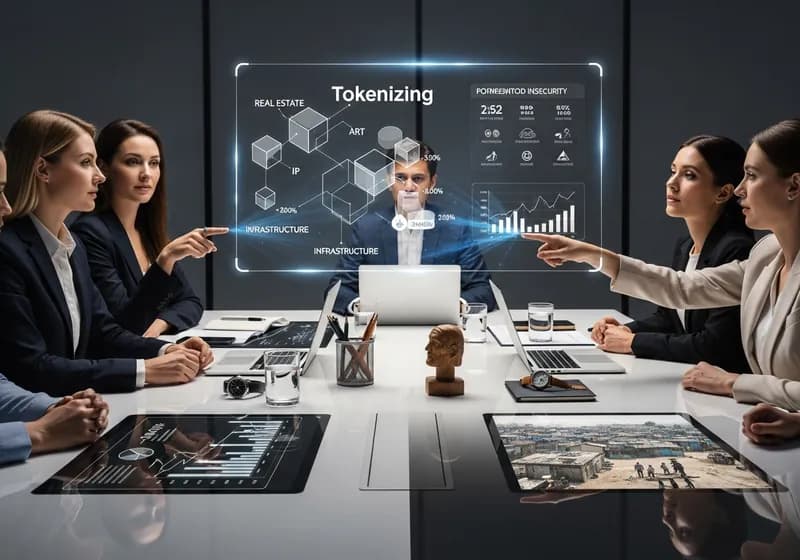
The promise is seductive: tokenization "democratizes wealth," giving everyone access to assets previously reserved for the rich. Fractional ownership, micro-investments, global access—the tools to break down economic barriers and rebuild social classes from the ground up.
But promises are not reality. Tokenization will rebuild social classes, but not in the way its proponents promise. It will create new forms of inequality, new mechanisms of wealth extraction, and new hierarchies that are more sophisticated and less visible than traditional class structures.
The question is not whether tokenization will change social classes. It will. The question is: who will benefit, and who will be left behind?
For foundational understanding, see our Ultimate Guide to Tokenization and RWA. See also The Hidden Economy of RWA for wealth extraction analysis. Compare traditional approaches in RWA vs Traditional Securities.
How Wealth Classes Work Today#
Understanding how wealth classes work today is essential to understanding how tokenization will change them.
The Traditional Hierarchy#
Traditional wealth classes follow a clear hierarchy:
The Capital Class: Owns capital assets (stocks, bonds, real estate, businesses). Controls 70-80% of wealth. Generates income from capital, not labor.
The Professional Class: Owns human capital (education, skills, expertise). Controls 15-20% of wealth. Generates income from high-value labor.
The Working Class: Owns labor (time, effort, basic skills). Controls 5-10% of wealth. Generates income from low-value labor.
The Underclass: Owns little or nothing. Controls less than 5% of wealth. Generates minimal or no income.
The Mechanism: Wealth classes are determined by what you own. Capital ownership creates wealth. Labor creates income, but rarely wealth.
The Access Barrier#
Traditional wealth classes are maintained by access barriers:
Capital Requirements: Access to capital assets requires significant capital, creating barriers to entry.
Information Asymmetry: Access to investment opportunities requires information and connections, creating barriers.
Regulatory Barriers: Access to certain assets requires regulatory approval, creating barriers.
The Mechanism: Access barriers prevent upward mobility, maintaining class structures.
The Power: Those who control access control class structures. Breaking barriers changes classes.
The Wealth Extraction Mechanism#
Traditional wealth classes extract value through multiple mechanisms:
Capital Returns: Capital ownership generates returns that exceed labor income, creating wealth accumulation.
Compounding: Wealth compounds over time, creating exponential growth for capital owners.
Network Effects: Wealth creates connections and opportunities that generate more wealth.
The Mechanism: Wealth extraction mechanisms transfer value from labor to capital, from workers to owners.
The Power: Those who control extraction mechanisms control class structures. Changing mechanisms changes classes.
Capital Access vs Capital Control#
Tokenization changes the relationship between capital access and capital control, creating new class dynamics.
The Access Promise#
Tokenization promises to democratize capital access:
Fractional Ownership: Fractional ownership enables access to capital assets without large capital requirements.
Micro-Investments: Micro-investments enable access with minimal capital, reducing barriers.
Global Access: Global access enables participation in markets worldwide, expanding opportunities.
The Promise: Tokenization promises to break down access barriers, enabling upward mobility and class restructuring.
The Appeal: This narrative appeals to those excluded from traditional capital markets, promising inclusion and opportunity.
The Control Reality#
But tokenization doesn't democratize capital control:
Platform Control: Tokenization platforms control access, extracting value through fees and restrictions.
Governance Control: Large token holders control governance, extracting value through decisions.
Infrastructure Control: Infrastructure controllers extract value through transaction fees and control.
The Reality: Tokenization democratizes access but not control. Value flows to controllers, not users.
The Extraction: Capital access creates the illusion of inclusion, while capital control extracts value from users to controllers.
The New Hierarchy#
Tokenization creates a new hierarchy:
Infrastructure Controllers: Control tokenization infrastructure, extract the most value (20-30% of total).
Asset Issuers: Tokenize assets, capture issuance premiums (20-30% of total).
Early Insiders: Buy early, benefit from price appreciation (10-20% of total).
Platform Operators: Operate platforms, extract fees (10-20% of total).
Late Retail Users: Buy late, capture minimal value (30-50% of total).
The Mechanism: The new hierarchy transfers value from late users to controllers, creating new forms of inequality.
The Power: Those who control infrastructure, assets, and platforms control the new class structure.
Tokenization & Micro-Ownership#
Tokenization enables micro-ownership, but micro-ownership doesn't necessarily create wealth.
The Micro-Ownership Model#
Tokenization enables micro-ownership of premium assets:
Fractional Tokens: Assets divided into millions of tokens, enabling micro-ownership.
Low Barriers: Low capital requirements enable participation from those excluded from traditional markets.
Diversification: Micro-ownership enables diversification across multiple assets.
The Promise: Micro-ownership promises wealth creation through access to premium assets.
The Appeal: This narrative appeals to those who want wealth but lack capital for traditional investments.
The Micro-Ownership Reality#
But micro-ownership doesn't necessarily create wealth:
Fee Extraction: Platform fees extract value from micro-owners, reducing returns.
Price Premiums: Micro-owners pay premiums above asset value, transferring value to issuers.
Liquidity Costs: Micro-owners pay spreads and fees for liquidity, transferring value to market makers.
The Reality: Micro-ownership creates access but not wealth. Value flows to controllers, not micro-owners.
The Extraction: Micro-ownership enables participation, but value extraction mechanisms prevent wealth creation.
The Illusion of Inclusion#
Micro-ownership creates the illusion of inclusion:
Access Without Control: Micro-owners have access but not control, creating the illusion of inclusion.
Participation Without Power: Micro-owners participate but don't have power, creating the illusion of democracy.
Ownership Without Wealth: Micro-owners own tokens but don't create wealth, creating the illusion of upward mobility.
The Mechanism: The illusion of inclusion prevents recognition of extraction mechanisms, maintaining class structures.
The Power: Those who control the illusion control class structures. Breaking the illusion changes classes.
Fractional Everything Economy#
Tokenization enables a "fractional everything" economy where everything can be owned fractionally, but this creates new forms of inequality.
The Fractional Model#
Tokenization enables fractional ownership of everything:
Real Estate: Fractional ownership of properties, enabling access without large capital.
Art & Collectibles: Fractional ownership of art, enabling access to premium assets.
Commodities: Fractional ownership of commodities, enabling access to resource markets.
The Model: Fractional ownership enables access to premium assets, promising wealth creation.
The Promise: Fractional ownership promises to break down barriers, enabling upward mobility.
The Fractional Reality#
But fractional ownership creates new forms of inequality:
Value Extraction: Fractional ownership enables value extraction through fees and premiums.
Control Concentration: Fractional ownership concentrates control in platform operators and large holders.
Wealth Transfer: Fractional ownership transfers value from fractional owners to controllers.
The Reality: Fractional ownership creates access but not wealth. Value flows to controllers, not fractional owners.
The Extraction: Fractional ownership enables participation, but extraction mechanisms prevent wealth creation.
The New Inequality#
Fractional ownership creates new forms of inequality:
Access Inequality: Those with better access to platforms and information gain advantages.
Information Inequality: Those with better information about assets and markets gain advantages.
Capital Inequality: Those with more capital to invest gain advantages through scale.
The Mechanism: Fractional ownership doesn't eliminate inequality. It creates new forms of it.
The Power: Those who control access, information, and capital control the new inequality structure.
Will the Poor Actually Get Rich?#
The fundamental question is: will tokenization actually help the poor, or will it extract value from them?
The Promise#
Tokenization promises to help the poor:
Access to Assets: Tokenization enables access to premium assets previously reserved for the rich.
Wealth Creation: Tokenization promises wealth creation through asset appreciation.
Upward Mobility: Tokenization promises upward mobility through capital access.
The Promise: Tokenization promises to break down barriers, enabling the poor to become rich.
The Appeal: This narrative appeals to those excluded from traditional wealth creation mechanisms.
The Reality#
But tokenization is more likely to extract value from the poor:
Fee Extraction: Platform fees extract value from all users, but the burden falls disproportionately on the poor who trade more frequently.
Price Premiums: The poor pay premiums above asset value, transferring value to issuers.
Liquidity Costs: The poor pay spreads and fees for liquidity, transferring value to market makers.
The Reality: Tokenization is more likely to extract value from the poor than to create wealth for them.
The Extraction: Value flows from the poor to controllers, creating new forms of wealth extraction.
The Illusion#
Tokenization creates the illusion of helping the poor:
Access Without Wealth: The poor gain access but not wealth, creating the illusion of inclusion.
Participation Without Power: The poor participate but don't have power, creating the illusion of democracy.
Ownership Without Returns: The poor own tokens but don't create wealth, creating the illusion of upward mobility.
The Mechanism: The illusion prevents recognition of extraction mechanisms, maintaining class structures.
The Power: Those who control the illusion control class structures. Breaking the illusion changes classes.
New Economic Castes#
Tokenization will create new economic castes that are more sophisticated and less visible than traditional classes.
The Infrastructure Caste#
Those who control tokenization infrastructure form a new caste:
Platform Operators: Control platforms, extract fees, capture network effects.
Blockchain Infrastructure: Control blockchain infrastructure, extract transaction fees.
Cross-Chain Bridges: Control interoperability, extract bridge fees.
The Caste: Infrastructure controllers extract the most value, forming the highest caste.
The Power: Infrastructure control creates insurmountable advantages, maintaining caste structures.
The Asset Caste#
Those who tokenize assets form a new caste:
Asset Issuers: Tokenize assets, capture issuance premiums, retain governance control.
Early Insiders: Buy early, benefit from price appreciation, exit before late buyers.
The Caste: Asset controllers extract significant value, forming a high caste.
The Power: Asset control creates advantages, maintaining caste structures.
The User Caste#
Those who use tokenization form a new caste:
Early Adopters: Buy early, benefit from price appreciation, capture some value.
Late Retail Users: Buy late, pay premiums, capture minimal value.
The Caste: Users extract less value, forming lower castes.
The Power: User status creates disadvantages, maintaining caste structures.
The Exclusion Caste#
Those excluded from tokenization form a new caste:
The Unbanked: Lack access to tokenization platforms, excluded from new economy.
The Uninformed: Lack information about tokenization, excluded from opportunities.
The Underinvested: Lack capital for tokenization, excluded from wealth creation.
The Caste: Excluded groups form the lowest caste, with no access to new wealth mechanisms.
The Power: Exclusion creates permanent disadvantages, maintaining caste structures.
The Next Class War#
Tokenization will trigger the next class war, but it will be fought differently than traditional class wars.
The Traditional Class War#
Traditional class wars are fought between:
Capital vs Labor: Capital owners vs workers, fought through unions, strikes, and political movements.
Rich vs Poor: Wealthy vs poor, fought through redistribution, taxation, and social programs.
The Mechanism: Traditional class wars are fought through collective action, political power, and economic pressure.
The Power: Traditional class wars redistribute wealth and power, changing class structures.
The Tokenized Class War#
Tokenized class wars will be fought between:
Infrastructure Controllers vs Users: Those who control infrastructure vs those who use it.
Asset Issuers vs Buyers: Those who tokenize assets vs those who buy tokens.
Early Insiders vs Late Retail: Those who buy early vs those who buy late.
The Mechanism: Tokenized class wars are fought through code, governance, and market mechanisms.
The Power: Tokenized class wars redistribute value through extraction mechanisms, changing class structures.
The Invisibility#
Tokenized class wars are invisible:
Code-Based: Class wars fought through code, not visible to most participants.
Market-Based: Class wars fought through markets, appearing as normal economic activity.
Governance-Based: Class wars fought through governance, appearing as democratic processes.
The Mechanism: Invisibility prevents recognition and resistance, maintaining class structures.
The Power: Those who control invisibility control class structures. Making wars visible changes classes.
Conclusion: The Rebuilding of Social Classes#
Tokenization will rebuild social classes, but not in the way its proponents promise. It will create new forms of inequality, new mechanisms of wealth extraction, and new hierarchies that are more sophisticated and less visible than traditional class structures.
For the Poor: Understand that tokenization is more likely to extract value from you than to create wealth for you. Don't be fooled by the promise of democratized finance. Recognize the extraction mechanisms. Protect your interests.
For the Rich: Understand that tokenization creates new opportunities for wealth extraction. Position yourself on the right side. Control infrastructure. Tokenize assets. Extract value. Maximize advantages.
For Everyone: Recognize that tokenization will rebuild social classes. The question is not whether it will happen. The question is: which side are you on?
The age of tokenized social classes is coming. The question is not whether it will happen. The question is: who will benefit, and who will be left behind?
Choose your side. But choose quickly. The rebuilding is happening fast, and those who wait will be left behind.
Continue Reading#
Explore more about tokenization economics and investment strategies:
- Minimum Investment Tokenized Real Estate - Access premium assets
- Building a Tokenized Portfolio - Portfolio strategies
- How to Invest in Tokenized Assets - Start investing
- Best Tokenization Platforms 2025 - Platform comparison
- Real Estate Tokenization Guide - Property tokenization
- Tokenization ROI Calculator - Calculate returns
The Strategic Research Division publishes analysis on the future of financial power, geopolitical dynamics, and the architecture of global capital systems. This is not investment advice. This is power analysis.