

Islamic Finance Tokenization Glossary: 50+ Essential Terms
Islamic finance glossary: This article provides terminology. For comprehensive Islamic finance and GCC tokenization guidance, see Islamic Finance & Blockchain: Shariah-Compliant Tokenization for GCC.
Understanding Islamic finance terminology is essential for tokenizing assets in MENA markets. This glossary covers Islamic finance concepts + tokenization terminology.
For comprehensive context, see our Ultimate Guide to Tokenization and RWA. Learn about Islamic finance tokenization in our Islamic Finance & Tokenization guide, and explore GCC opportunities in our RWA in GCC Markets guide.
Core Islamic Finance Principles#
Riba (Usury)#
Islamic prohibition on interest income. Tokenization structures must ensure no prohibited "riba" - instead, profits come from asset ownership/appreciation.
In Tokenization: Token returns must come from asset performance, not fixed interest.
Halal (Permissible)#
Activities/investments permitted under Islamic law. Opposite of "haram."
In Tokenization: Ensuring tokenized asset complies with Islamic principles.
Haram (Forbidden)#
Activities prohibited under Islamic law: alcohol, pork, gambling, weapons, non-compliant finance.
In Tokenization: Cannot tokenize haram assets or use riba-based structures.
Shariah Compliance#
Adherence to Islamic law principles. Tokenization platforms in MENA typically require Shariah board approval.
Asset Structures#
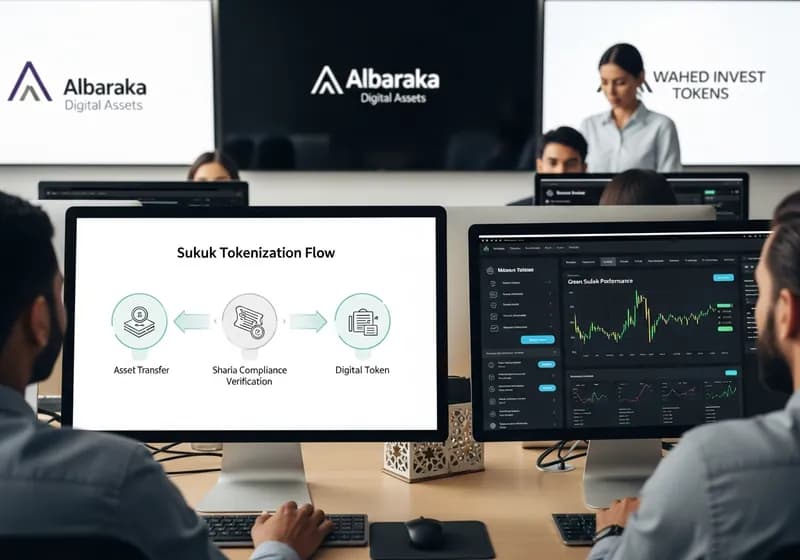
Sukuk (Islamic Bond)#
Structured as asset ownership, not debt. Holders own portion of underlying asset.
Tokenization Application: Real estate sukuk tokens represent ownership stake in property, not loan.
Example: $100M office building sukuk divided into 10,000 tokens.
Ijara (Lease)#
Islamic leasing where lessor retains ownership; lessee pays for use.
Tokenization Application: Tokenize lease receivables. Tokens represent right to lease payments.
Example: Equipment lease securitization via tokens.
Murabaha (Cost-Plus Sale)#
Seller discloses cost; buyer pays cost + agreed markup. Transparently structured.
Tokenization Application: Commodity pre-purchase agreements tokenized (coffee, dates, etc.).
Musharaka (Partnership)#
Joint venture where partners share profits/losses proportionally.
Tokenization Application: Private equity tokens representing partnership interests.
Mudaraba (Trust Partnership)#
One partner (investor) provides capital; other (entrepreneur) manages. Profits shared; losses borne by investor.
Tokenization Application: Venture fund tokens; investor tokens representing mudaraba interest.
Istisnaa (Manufacturing Contract)#
Custom goods manufactured to buyer specifications.
Tokenization Application: Manufacturing projects pre-financed via tokens.
Wakalah (Agency)#
One party (wakeel) acts as agent for another. Earns specified fee, not percentage of transaction.
Tokenization Application: Platform fee structures; custody arrangements.
Compliance Concepts#
Shariah Board#
Islamic scholars reviewing structure for compliance. Essential for MENA tokenization.
Tokenization Context: Every MENA platform needs Shariah board approval of token structure.
Typical Cost: $50-150K annual retainer.
Fatwa#
Religious edict by Islamic scholar on permissibility of financial structure.
Tokenization Application: Fatwa issued by recognized scholars confirming tokenization structure is halal.
Tawaruq (Reverse Murabaha)#
Purchasing commodity for cash, selling on credit to third party (complex to show as halal). Generally avoided in modern Islamic finance.
Tokenization Application: Avoid this structure - usually deemed non-compliant by modern Shariah boards.
Bay (Sale)#
Fundamental Islamic sale contract. Foundation for most compliant tokenization structures.
Tokenization Application: Tokens represent ownership resulting from bay contract.
Financial Instruments#
Wakf (Endowment)#
Religious/charitable endowment. Assets held in perpetuity for specified purpose. Often tax-advantaged.
Tokenization Application: Emerging: tokenizing wakf assets for distribution of returns to beneficiaries.
Zakat (Almsgiving)#
Annual charity obligation (2.5% of qualifying wealth).
Tokenization Context: When structured properly, tokenized asset returns may be zakatable.
Qard (Loan)#
Islamic loan without interest. Lender expects repayment only; profits not distributed.
Tokenization Application: Generally NOT used - creates confusion with riba. Use murabaha or other alternatives instead.
Kafala (Guarantee)#
Guarantee of third-party obligation. Guarantor ensures performance.
Tokenization Application: Smart contract-based guarantees backed by real collateral.
Risk & Insurance Concepts#
Takaful (Islamic Insurance)#
Mutual insurance where members pool risk.
Tokenization Application: Emerging - takaful products structured as tokens for risk-sharing.
Gharar (Uncertainty)#
Excessive uncertainty in contract terms. Forbidden in Islamic finance.
Tokenization Context: Token terms must be clear (NOT: "returns depend on unspecified future events").
Darar (Harm/Injury)#
Principle: contracts cannot cause unreasonable harm to either party.
Tokenization Application: Token structure must be fair to all parties; no predatory terms.
Tokenization-Specific Terms#
Smart Contract (Aqd, al-aqd al-akli)#
Programmable contract executing automatically. Islamic scholars accept if underlying structure is halal.
Application: Smart contracts deploying murabaha, ijara, or musharaka terms.
Blockchain (Daftar Distributed)#
Distributed ledger. Islamic scholars generally neutral - halal depends on use case, not technology.
Token Value Source#
Token value must derive from underlying asset/service, NOT speculation.
Correct: Token backed by property ($100M property = token worth ~$10K each) Incorrect: Token value purely speculative (no underlying asset)
Custody (Tahfiz)#
Islamic principle of safeguarding. Custodian holds assets on behalf of token holders.
Application: Central to MENA tokenization - usually required.
Regulatory Concepts by Region#
Saudi Arabia (CMA)#
- Requires Murabaha or Ijara-compliant structures
- Mandatory Shariah board approval
- Custody requirements strict
UAE (VARA/DFSA)#
- Accepts multiple Islamic structures
- Shariah advisory not always mandatory (discretionary)
- Flexible custody arrangements
Malaysia (BNM)#
- Sharia advisory committee approval required
- IFN (Islamic Financial Institutions) framework
- Strict on gharar avoidance
Bahrain (CBB)#
- Well-developed Islamic finance regulations
- Fatwa-based framework
- Global Islamic finance hub
Red Flags in Tokenization Structures#
🚫 Structures to Avoid#
-
Fixed Returns → Looks like riba (interest)
- Fix: Tie to actual asset performance
-
Speculation-Based → No underlying asset
- Fix: Ensure real asset backing
-
Hidden Fees → Violates transparency principle
- Fix: All fees explicitly stated upfront
-
Uncertain Terms → Gharar (uncertainty)
- Fix: Clear, specific token terms
-
No Shariah Review → Risk of rejection
- Fix: Get fatwa/board approval BEFORE launch
Green Flags in Compliant Structures#
✅ Structures That Work#
- Real Asset Backing → Property, equipment, commodities
- Transparent Pricing → Cost + specified margin disclosed
- Profit Sharing → Based on actual returns
- Shariah Approval → Fatwa/board blessing obtained
- Clear Legal Structure → SPV, custody, all details spelled out
Common Questions#
Q: Can tokens pay interest (fixed yield)?
A: Not directly. Structure as profit-sharing from asset performance instead.
Q: Must tokenized assets be tangible (physical)?
A: Strongly preferred. Intangible services accepted if clearly defined.
Q: Can real estate tokens be rented to investors?
A: Yes - that's ijara structure (rental income to token holders).
Q: Is cryptocurrency (Bitcoin) halal for tokenization?
A: Controversial. Most Shariah boards require fiat or stablecoin backing for halal assurance.
Q: How is zakat calculated on tokens?
A: As percentage of token value. Calculation depends on whether tokens are held >1 hijri year.
Glossary by Category#
A - Asset Types#
- Annuity, Asset-backed securities, Agriculture projects
B - Basics#
- Bay, Bond, Broker, Blockchain
C - Compliance#
- Capacity, Contracts, Custody
D - Derivatives & Debt#
- Darar, Debt-free financing, Daman
E - Equity & Endowment#
- Equity tokens, Endowment, Exchange
F - Fundamentals#
- Fatwa, Fiqh, Financial instruments
G - Governance & Risk#
- Gharar, Guarantee, Governance
I - Islamic Instruments#
- Ijara, Istisnaa, Ijarah
J - Joint Ventures#
- Jointly owned assets
K - Knowledge & KYC#
- Kyc (comply with Islamic screening)
M - Money & Management#
- Murabaha, Musharaka, Mudaraba
P - Profit & Partnership#
- Profit sharing, Partnership
Q - Qualified Investors#
- Qualified buyer status
R - Return & Revenue#
- Revenue streams, Risk management
S - Shariah & Securities#
- Shariah law, Sukuk, Securities
T - Tokenization & Trading#
- Tokenization, Trading, Token
W - Wealth & Waqf#
- Wakf, Wealth management, Wakalah
Z - Zakat#
- Zakat calculation, Zakat-compliant structures
Resources for Learning More#
- AAOIFI Standards (Accounting and Auditing Organization for Islamic Financial Institutions)
- Central Bank Guidance (Saudi CMA, UAE VARA, Malaysia BNM)
- Fatwa Databases (Islamic Finance database, Shariah Standard database)
Conclusion#
Islamic finance terminology is complex, but essential for MENA tokenization. Key principle: underlying asset must be halal, and structure must avoid riba.
Learn More: Islamic Finance & GCC Tokenization#
Comprehensive Islamic Finance Guide:
→ Islamic Finance & Blockchain: Shariah-Compliant Tokenization for GCC - Complete Islamic finance framework
Related Islamic Finance Articles:
- Shariah-Compliant Asset Tokenization: Complete Guide for GCC Investors - Shariah compliance guide
- Tokenized Sukuk: The Future of Islamic Finance on Blockchain - Sukuk tokenization
- Saudi Arabia Tokenization & Vision 2030: Market Opportunities - Saudi opportunities
Regulatory:
- Saudi Arabia Tokenization Regulations: Complete 2025 Guide - Saudi regulations
- Qatar Tokenization Opportunity: QFC Framework Guide - Qatar framework
Next Steps:
- Contact Our Islamic Finance Team - Get Shariah guidance
- Schedule a Consultation - Learn about GCC tokenization
Note: This glossary is educational. Consult qualified Islamic finance advisors and Shariah scholars for specific structures.